Deep Learning Indaba 2026 Reflection: Days 1 & 2
Image: Nontokozo Manukuza at the Deep Learning Indaba 2026 in Lagos, Nigeria.
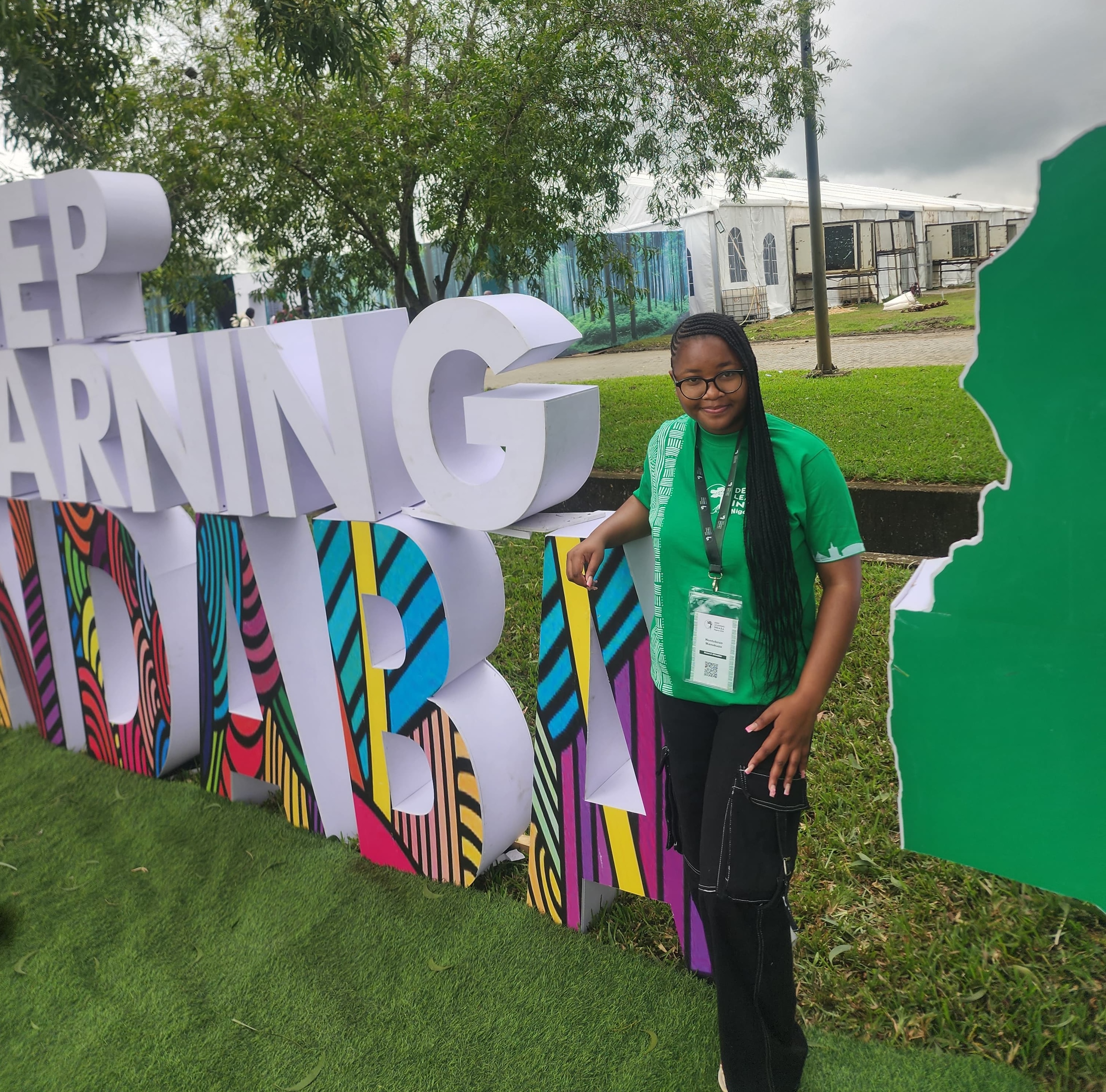
Image: Nontokozo Manukuza at the Deep Learning Indaba 2026 in Lagos, Nigeria.
Nontokozo Manukuza, an MSc student supported by the AI4D African Languages Lab and a research assistant on our Data.org Language Playbooks project, is attending the Deep Learning Indaba 2026 in Lagos, Nigeria. Here are their reflections from the first two days of the conference.
The first two days at the Deep Learning Indaba 2026 in Nigeria have been an incredible experience. It is my first time visiting Nigeria, and I have already learned so much.
Day 1 was mainly about settling in after travelling. The welcoming event gave us a chance to experience Nigerian culture through the food, music, and hospitality. We also reflected on this year’s theme, “Ìmọ̀ Wa” (Shared Knowledge), which set the tone for the entire event. It highlighted the importance of collaboration, learning from one another, and building knowledge that can benefit communities across Africa. One of the sessions on reading and writing research papers stood out because it shared practical techniques for understanding research papers and writing stronger scientific papers — skills that will be very useful in my academic journey.
Day 2 was even more inspiring. Dr. Catherine Nakalembe’s keynote showed how GeoAI can help solve African challenges such as agriculture, disaster management, and environmental monitoring. Her message about building AI solutions that are designed for African contexts reminded me that technology has the greatest impact when it addresses the realities of the communities it serves.
Another highlight was Prof. David Adelani’s session on building African-centric large language models for African languages. He emphasized the importance of high-quality datasets, careful data curation, strong evaluation benchmarks, and developing models that truly understand African languages. His work strongly connects with my own Master’s research on teaching large language models to correctly interpret isiZulu idioms while preserving their cultural meaning.
What made this even more meaningful was how well it connected with the cloud GPU infrastructure tutorial that followed. Prof. Adelani’s session showed us what it takes to build better African LLMs, while the tutorial demonstrated how we can train and scale those models using dedicated computing resources. Building and fine-tuning modern LLMs requires powerful GPU infrastructure, and the tutorial highlighted why moving beyond platforms like Google Colab to dedicated GPU environments is essential for training larger models, experimenting more efficiently, and deploying AI solutions at scale. Together, these sessions reinforced that advancing African LLMs requires both high-quality language resources and the computing power to train them effectively.
Overall, these first two days have motivated me even more. Every session has reminded me of the importance of learning, sharing knowledge, and building AI solutions that address African challenges. I am looking forward to learning even more in the coming days.
Follow our journey at Deep Learning Indaba 2026 and beyond:
- DSFSI: https://linktr.ee/dsfsi
- AfriDSAI: https://linktr.ee/afridsai