AI4D Lab Visits Part 2: Sign Language and Inclusive AI at KNUST's RAIL, Ghana
PhD student Thapelo Sindane visits the Responsible AI Lab at KNUST, presents his SASL research, and reflects on collaboration between RAIL, MCAAI and DSFSI.
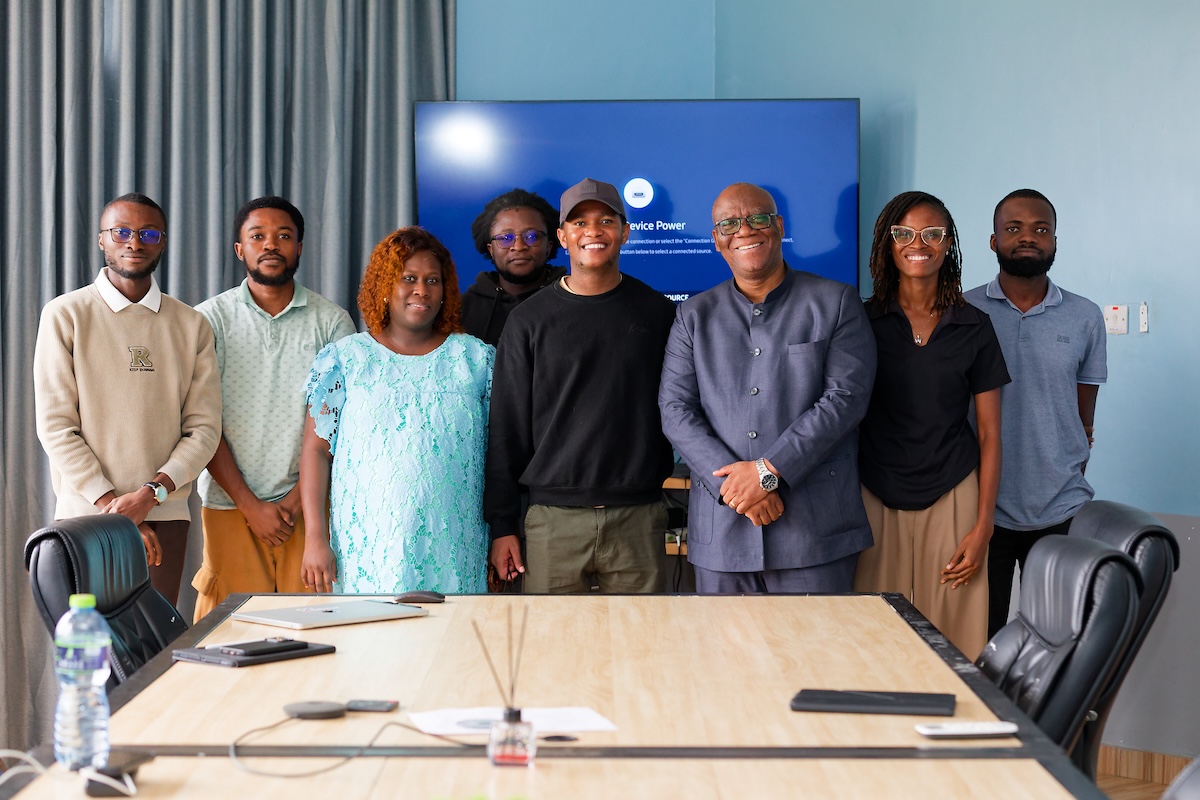
Thapelo Sindane, a PhD student at DSFSI working on translation technologies for South African Sign Language (SASL), visited two AI research labs on the continent with sponsorship from the AI4D Africa programme. This is the second of his two posts. Part 1 covers his visit to Maseno University in Kenya.
Thapelo with members of the Responsible Artificial Intelligence Lab (RAIL) at KNUST, Ghana.
Visit to KNUST’s RAIL in Ghana
My second visit was to the Kwame Nkrumah University of Science and Technology (KNUST) in Ghana, where I visited the Responsible Artificial Intelligence Laboratory (RAIL), led by Prof. Jerry John Kponyo. This visit formed part of the Artificial Intelligence for Development (AI4D) Africa programme’s mandate to promote knowledge exchange, collaboration, and interaction among participating research laboratories across Africa.
RAIL’s work is particularly relevant to my research because of its efforts to build technological and research capacity for Deaf and other underserved communities. During the visit, I interacted with several members of the research team and learned about a range of projects:
- Crop disease detection: Explored through a presentation and discussion with Musah.
- Signtalk: Discussed with Christian; this project has strong alignment with my own work in sign-language technologies.
- I-See project: Discussed with Dickson; focuses on technological solutions for blind communities.
- iHear project: Discussed with Dawson; addresses the needs of partially Deaf and hard-of-hearing communities.
I was also warmly received by the administrative and institutional support structures, including Christiana and Erica, as well as Felix from the KEEP office. Their support and engagement contributed positively to the visit and demonstrated the broader institutional environment supporting research at KNUST.
“From Grassroots to Frontiers”
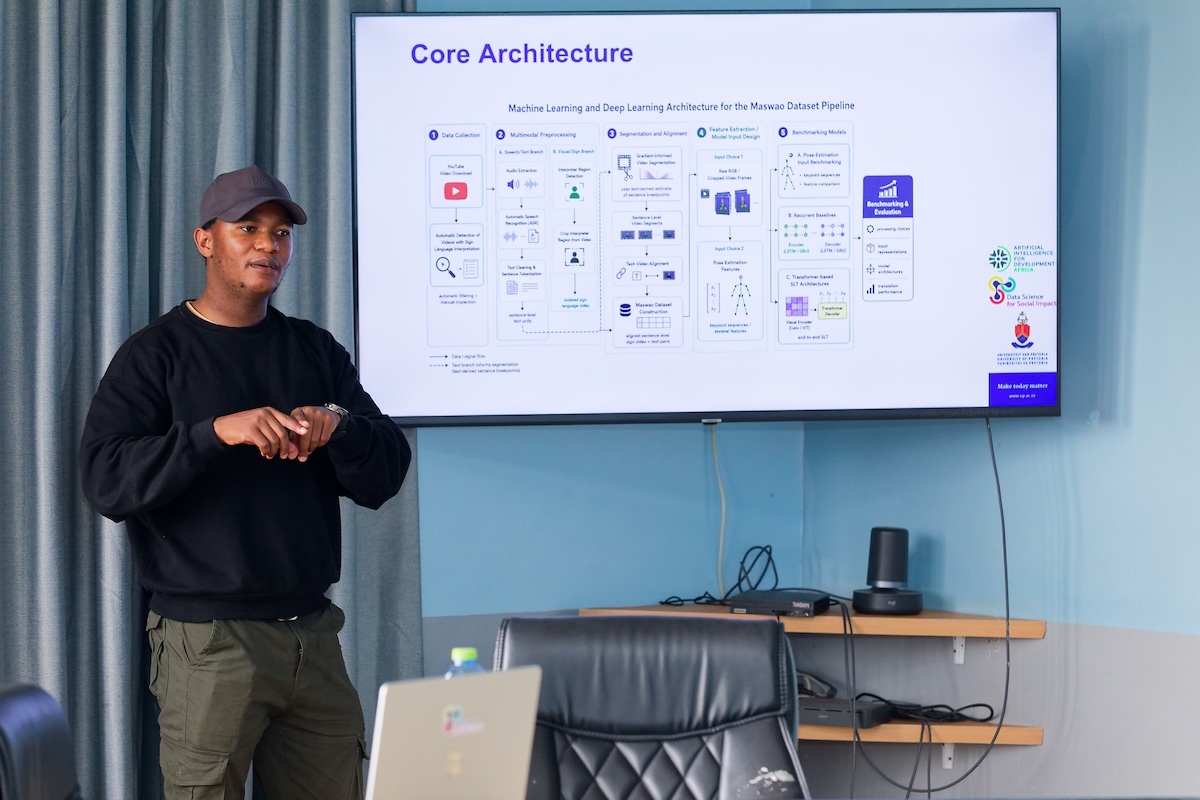
Thapelo presenting his PhD research at RAIL.
During my stay, I delivered a presentation on my PhD research entitled “From Grassroots to Frontiers: Building Capacity for South African Sign Language.” The presentation provided an overview of my research journey, the motivation behind developing technologies for South African Sign Language (SASL), the progress made thus far, and the broader objective of building sustainable capacity around SASL research and technology development.
The presentation generated valuable feedback that I intend to incorporate into the continued development of my PhD research and thesis. In particular, the discussions reinforced the importance of treating SASL dataset collection as a sensitive and community-centred process, rather than simply as a technical data-acquisition exercise. The feedback also highlighted the importance of maintaining continued stakeholder engagement throughout the research process to ensure that technological solutions remain aligned with the needs, expectations, and rights of the communities for whom these technologies are intended.
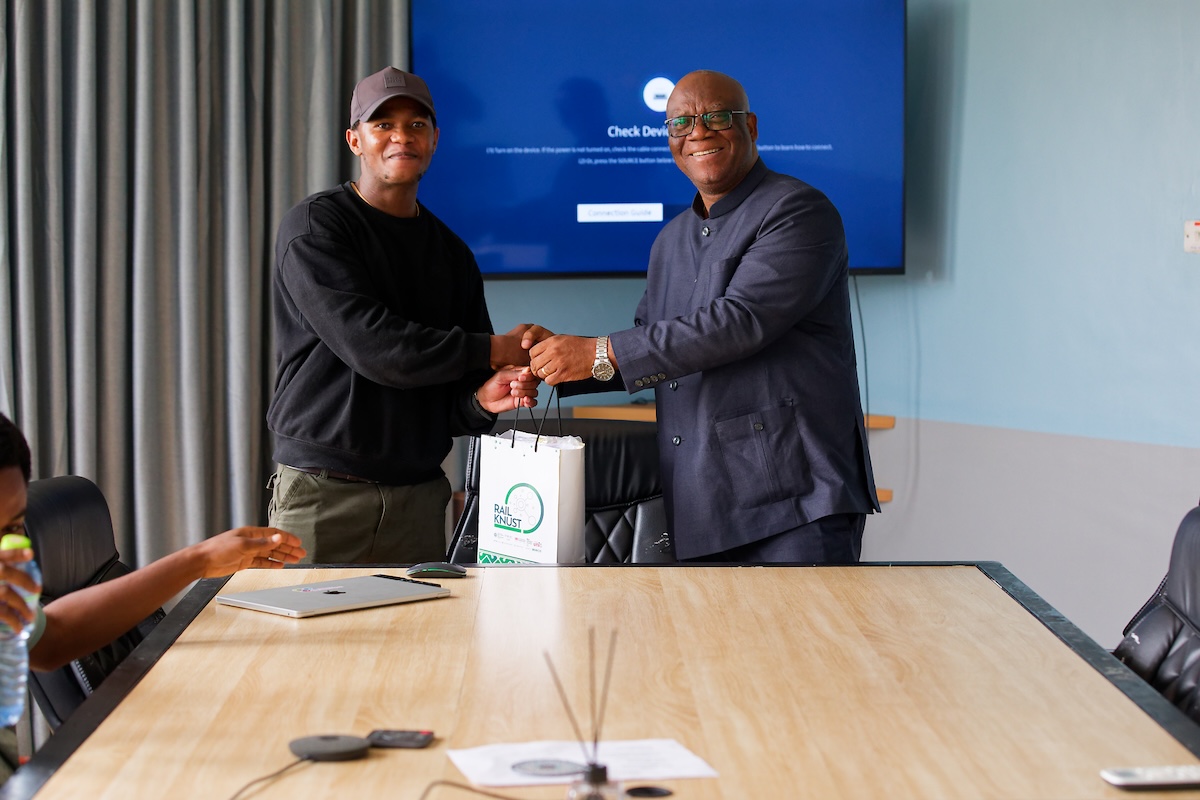
Thapelo receiving a RAIL KNUST gift at the end of the visit.
Collaboration and Knowledge Exchange
A significant outcome from both visits was the recognition of the strong complementarity between the research activities at MCAAI, RAIL, and the Data Science for Social Impact (DSFSI) Lab at the University of Pretoria. Although the laboratories operate in different national and institutional contexts, they share a common interest in applying AI to African languages and underserved communities.
There is considerable potential for these laboratories to establish strategic research partnerships. Areas of collaboration could include:
- Sign-language dataset development
- Machine translation
- Speech and language technologies
- Computer vision
- Responsible AI
- Community-centred research methodologies
- Capacity development
An important first step towards establishing such collaboration would be the creation of a direct and sustained line of communication between the laboratories. This could provide a foundation for researchers and students to share datasets, methodologies, research findings, and technical expertise, as well as opportunities for joint publications and funding applications. Over time, this could develop into more structured forms of collaboration, including joint research projects, researcher and student exchanges, and collaborative applications for funding aimed at developing inclusive AI technologies for African communities.
Conclusion
The visits to Maseno University and KNUST were highly valuable both academically and professionally. They provided opportunities to engage with researchers working on AI, African languages, sign-language technologies, accessibility, and responsible AI, while also providing a platform to present and receive feedback on my doctoral research.
The Maseno visit demonstrated the strong alignment between Kenyan and South African Sign Language research, while the KNUST visit demonstrated the potential for collaboration with a research laboratory actively developing AI solutions for Deaf, hard-of-hearing, blind, and other underserved communities.
More broadly, the visits reinforced the importance of African-led research collaborations that develop technologies for African communities while taking local contexts, languages, cultures, and ethical considerations into account. I hope that these engagements can serve as the foundation for sustained collaboration between RAIL, MCAAI, and the DSFSI Lab, with the ultimate objective of developing practical, responsible, and impactful AI technologies that meaningfully benefit our communities.
Follow our journey:
- DSFSI: https://linktr.ee/dsfsi
- AfriDSAI: https://linktr.ee/afridsai