Hundzula in Mafikeng: From the Place of Rocks to the Future of African Languages
An Interdisciplinary Retreat Exploring African NLP and Linguistics - Seani Rananga
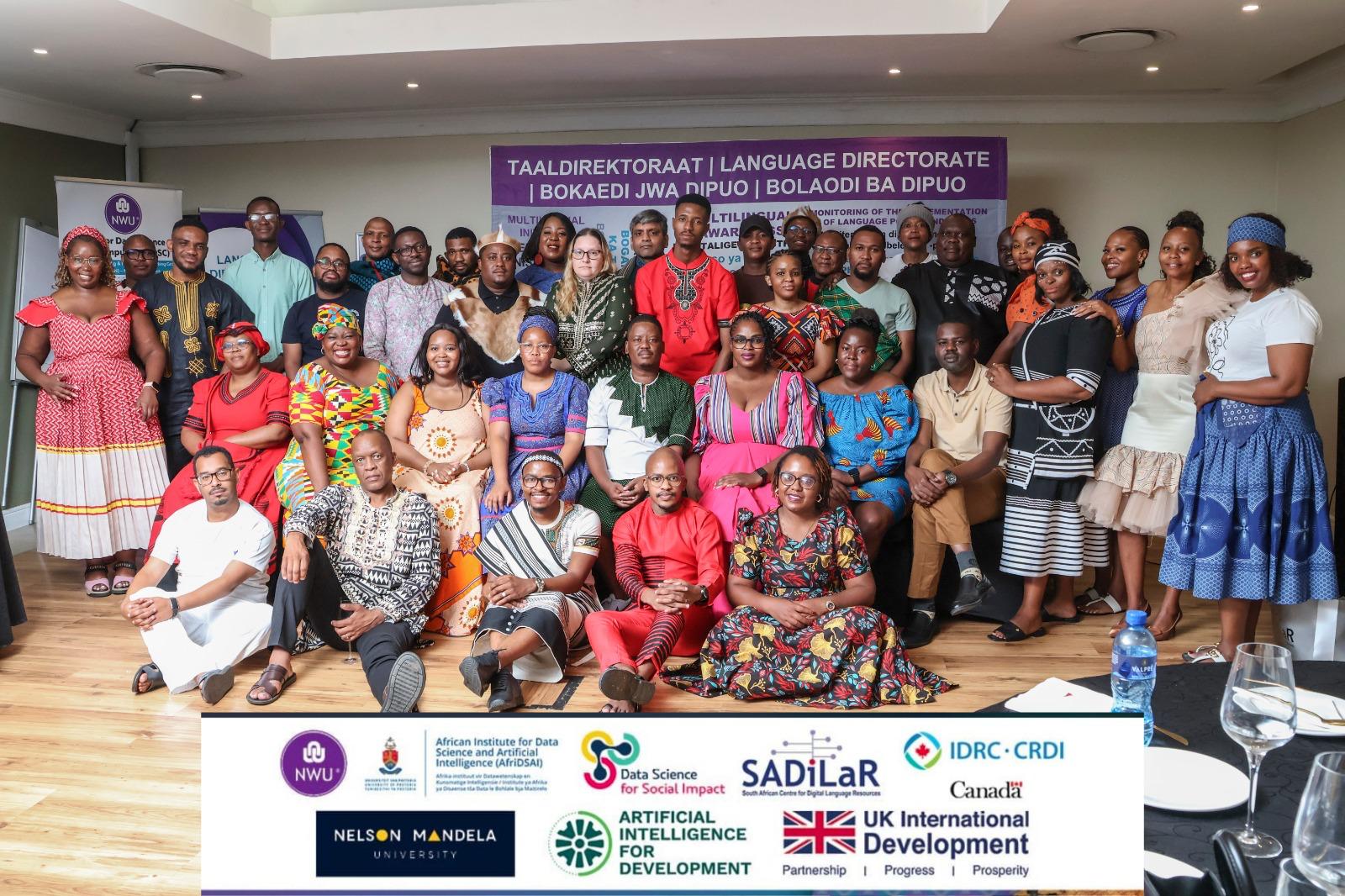
An Interdisciplinary Retreat Exploring African NLP and Linguistics
The Hundzula retreat brought together scholars, researchers, linguists and data scientists to explore the evolving landscape of African language research. Over the course of workshops, seminars and a panel discussion, participants explored dictionary development, language technologies, language processing and the development of language resources. The retreat highlighted the importance of interdisciplinary and collaborative approaches to advance African languages.
Keynote Insights
The retreat featured a series of thought-provoking keynote addresses that highlighted the challenges that exist in language research, African linguistics and data science.
- Dr Luyanduhlobo Makwati (University of Zimbabwe) explored the complexities posed by polysemous words in cross-border languages in Natural Language Processing and Linguistics
- Dr Alaa Aldein Mohamed Suliman Ibrahim (University of KwaZulu-Natal) discussed Data-Driven Machine Learning Models for E. coli Concentrations Prediction.
- Dr Kea Seshoka (North-West University) delivered a keynote highlighting how “low resource” languages are in fact rich in resources that have simply not yet been digitised.
Collectively, the keynote presentations set a strong intellectual foundation for the retreat, reinforcing the need for interdisciplinary collaboration, digitisation, and context-aware approaches in advancing African language research and technologies.
Datasets and Data Development initiatives
In addition to the keynotes, the retreat highlighted a variety of innovative, data development initiatives that enhance African language research and digitisation.
- Ntshwaki Malatji discussed Building a Corpus of Everyday Spoken Khelobedu for Linguistic Analysis and Orthography Development.
- Mokgadi Mathole – introduced a “living dictionary” as a tool for developing and digitising under-resourced African languages: a case of Khelobedu.
- Dr Nts’oeu Seepheephe – presented work on a Dictionary of Lesotho English: Collecting and Describing Local and Sesotho-Derived Vocabulary.
Learning in Practice: Seminars and Workshops
Three practical demonstrations were conducted, allowing participants hands-on exposure to the techniques and tools in African language research and technology.
- Makhamisa Senekhane discussed Automatic extraction of tone using Sesotho as a base.
- Marissa Griesel addressed Data annotation.
- Prof Sree Ganesh Thotempudi explored The Power of Large Language Models (LLMs) in the Social Sciences.
Unexpected Highlights:
One of the unexpected highlights of the retreat was the dedicated panel discussion on post graduate studies in interdisciplinary programmes. The session provided a rare opportunity to explore supervision-related challenges. The panel highlighted the importance of mentorship and interdisciplinary collaboration. Key contributions came from both postgraduate participants and supervisors, including, Dr Sibeko and Dr Marongedze.
Another standout moment was Dr Keaobaka Seshoka’s keynote, which challenged the framing of “low-resource languages.” Dr. Seshoka argued that the label is derogatory and implicitly suggests that these languages are inherently limited in capability.
In addition, we introduced a new initiative at this year’s retreat: the issuance of attendance certificates to all participants. This gesture was warmly received and served as a formal acknowledgement of everyone’s engagement and contribution. A sample certificate is included below.
It is also important to highlight that through Hundzula and other collaborative efforts, we are proud to have celebrated the graduation of one PhD candidate, Dr Dan Masethe, who completed his doctorate through Hundzula and graduated at last year’s Spring Graduation ceremony. This milestone reflects the growing impact of our collaborative initiatives and our commitment to advancing postgraduate scholarship.
Lightning Talks
Given the large number of attendees, presentation formats for the session were restricted to key notes and lightning talks, which proved to be an effective approach as it enhanced participation whilst fostering collaboration and knowledge sharing across multiple disciplines.
Participant feedback:
Attendees praised the retreat’s progressive and collaborative approach.
- Khanyisa Zinto (NMU): Appreciated the focus on future directions and actionable collaborations.
- Gontse Mutla (NWU): Highlighted the value of interdisciplinary dialogue in strengthening African language research.
- Hanschen Vanas (NWU): Called for integrated, national approaches to avoid siloed language development.
- Dr Alaa Aldein Mohamed Suliman (UKZN): Emphasised the importance of culturally grounded, community-driven research.
Acknowledgements:
We extend our heartfelt appreciation to the organising committee, sponsors, and all participants for their invaluable contributions. The Hundzula Retreat continues to serve as a beacon of innovation in African linguistics and natural language processing, paving the way for impactful work in the years to come.
This workshop was made possible through financial support from UK International Development and the International Development Research Centre (IDRC), Ottawa, Canada, under the AI for Development: Responsible AI, Empowering People (AI4D) programme. This support enabled the sponsorship of participants from the SADC region to attend Hundzula, marking the first time such regional participation was facilitated.
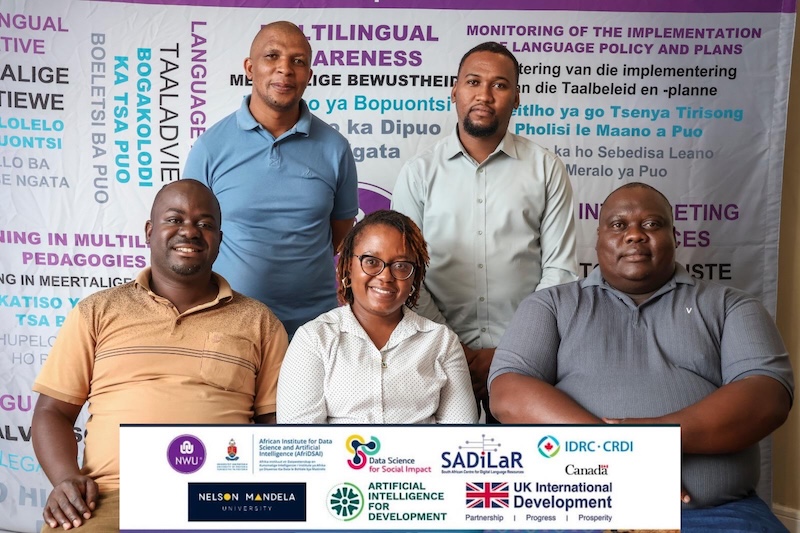
SADC Participants
The article written by NWU for the Hundzula posted at the NWU news site: https://news.nwu.ac.za/hundzula-retreat-seeks-practical-digital-solutions-low-resource-african-language
We also submitted a paper for RAIL based on Hundzula.