DSFSI Research Earns Multiple Honours at ACL 2026
Image: Dr Idris Abdulmumin with the Social Impact Paper Award and SAC Highlight certificates for Afri-MCQA at ACL 2026 in San Diego.
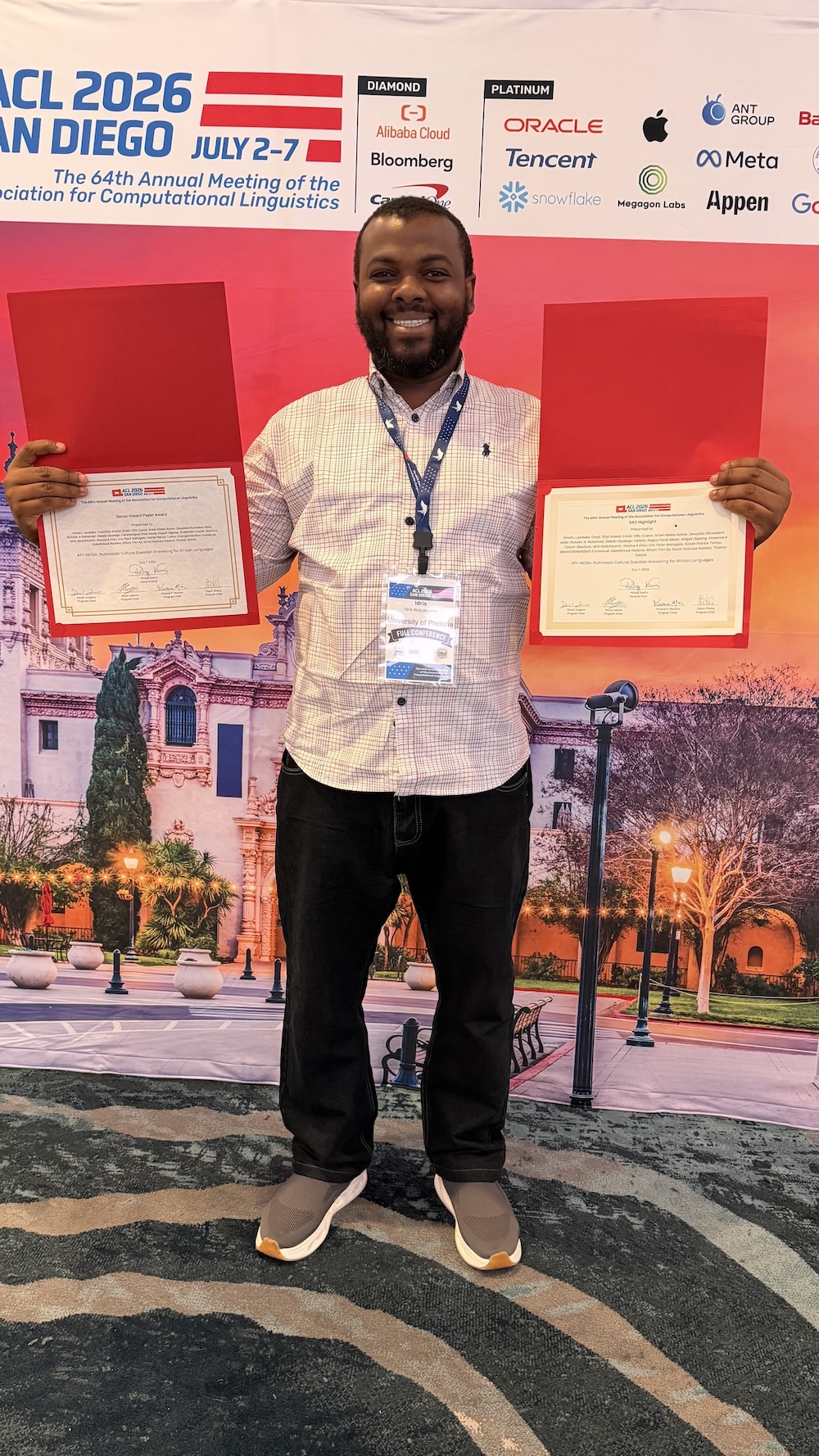
Image: Dr Idris Abdulmumin with the Social Impact Paper Award and SAC Highlight certificates for Afri-MCQA at ACL 2026 in San Diego.
Research from the Data Science for Social Impact (DSFSI) Lab at the University of Pretoria has received multiple international honours at the 2026 Annual Meeting of the Association for Computational Linguistics (ACL), one of the world’s leading conferences in natural language processing (NLP), held in San Diego.
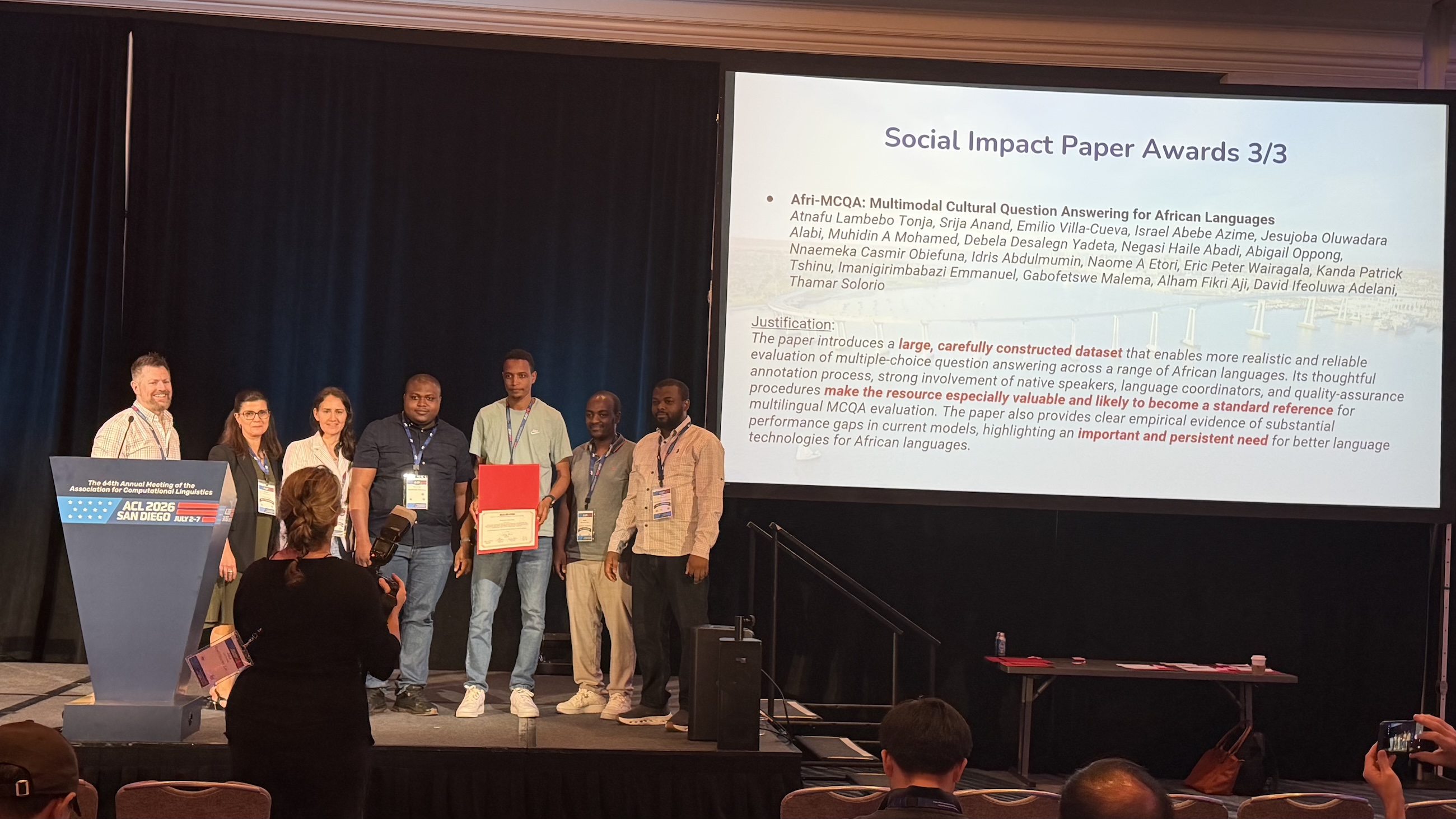
Research co-authored by Dr Idris Abdulmumin was recognised across several conference programmes. The Afri-MCQA paper, which introduces a native-speaker multimodal cultural question-answering benchmark covering 15 African languages across 12 countries, received both the Social Impact Paper Award and the ACL SAC Highlight Award.
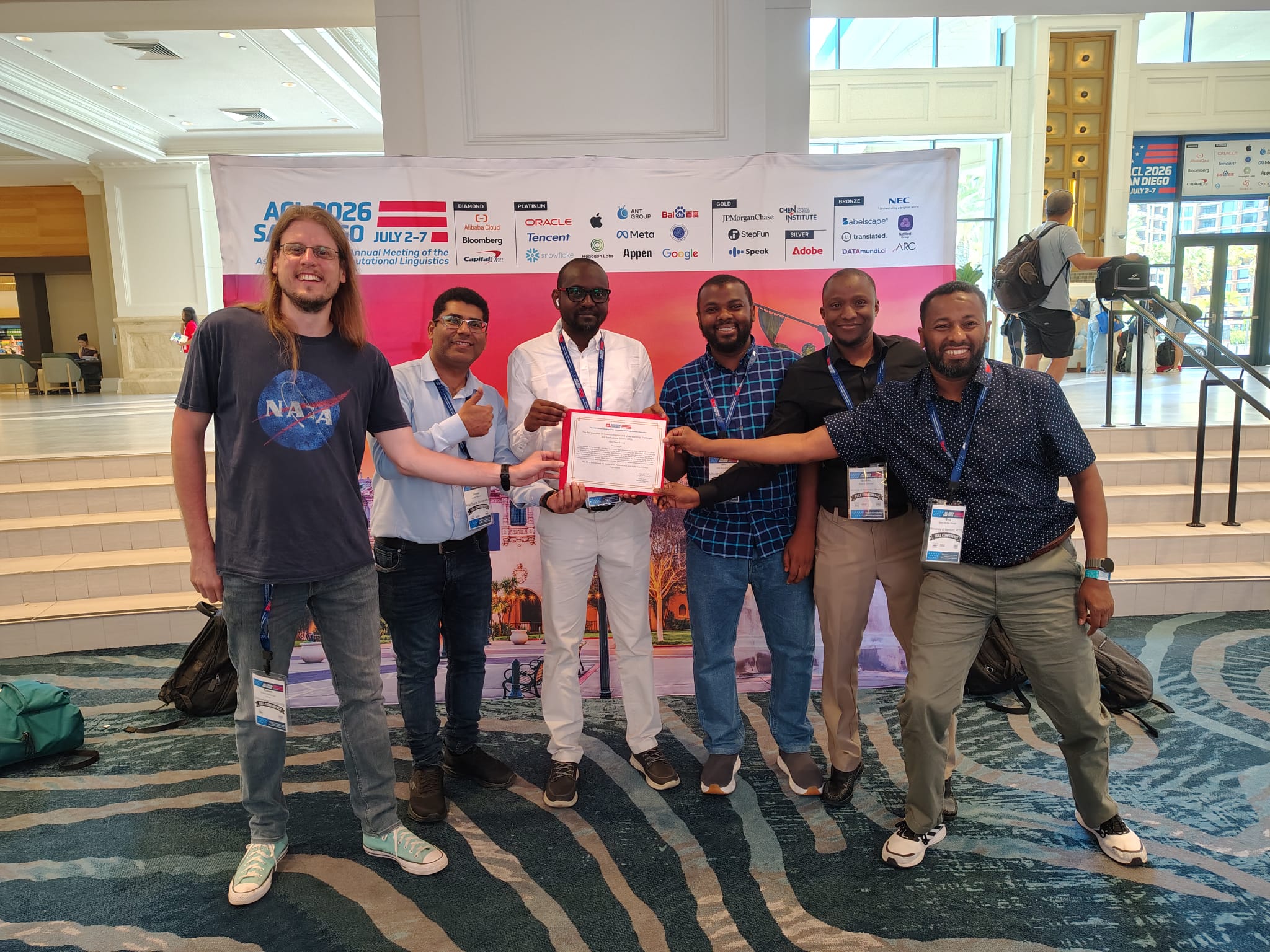
The POLAR ACL Findings paper, which examines fine-grained political polarisation across 22 languages, received the Best Paper Award at the 9th Workshop on Event Extraction and Understanding: Challenges and Applications (EEUCA @ ACL 2026). In addition, the POLAR SemEval shared task was named Runner-Up for Best Task Organised at SemEval 2026.
Beyond the awards, Dr Abdulmumin also represented African-led NLP research in discussions around the future of AI alignment. At the BATCH 2026 Beyond Alignment session, he delivered a talk titled “Perspectives on Alignment from Low-Resource Languages.” Drawing on collaborative work with DSFSI, HausaNLP and Masakhane, the talk examined a critical question in AI development: whose values are represented when we describe a model as “well aligned”?
Dr Abdulmumin presented evidence that safety alignment approaches developed primarily for high-resource languages do not necessarily transfer effectively to African languages. He highlighted how culturally grounded, community-built resources such as AfriGuard, POLAR and Afri-MCQA can help address these gaps by bringing African languages, cultures and perspectives into the development and evaluation of AI systems.
The honours received at ACL 2026 and SemEval highlight the growing international influence of African-led NLP research and the impact of building language technologies with and for communities that have historically been underrepresented in AI. They also reflect the contribution of the many researchers and collaborators whose expertise and commitment have helped advance these projects.
Taken together, these achievements point to a broader shift in the field: African researchers are not simply adapting technologies developed elsewhere, but are increasingly shaping the questions, benchmarks and methods that define the future of multilingual AI. For DSFSI, the recognition reinforces its commitment to research that combines technical innovation with social impact, while demonstrating the value of collaborative, community-centred approaches to building language technologies for Africa and the world.
Representing DSFSI in San Diego
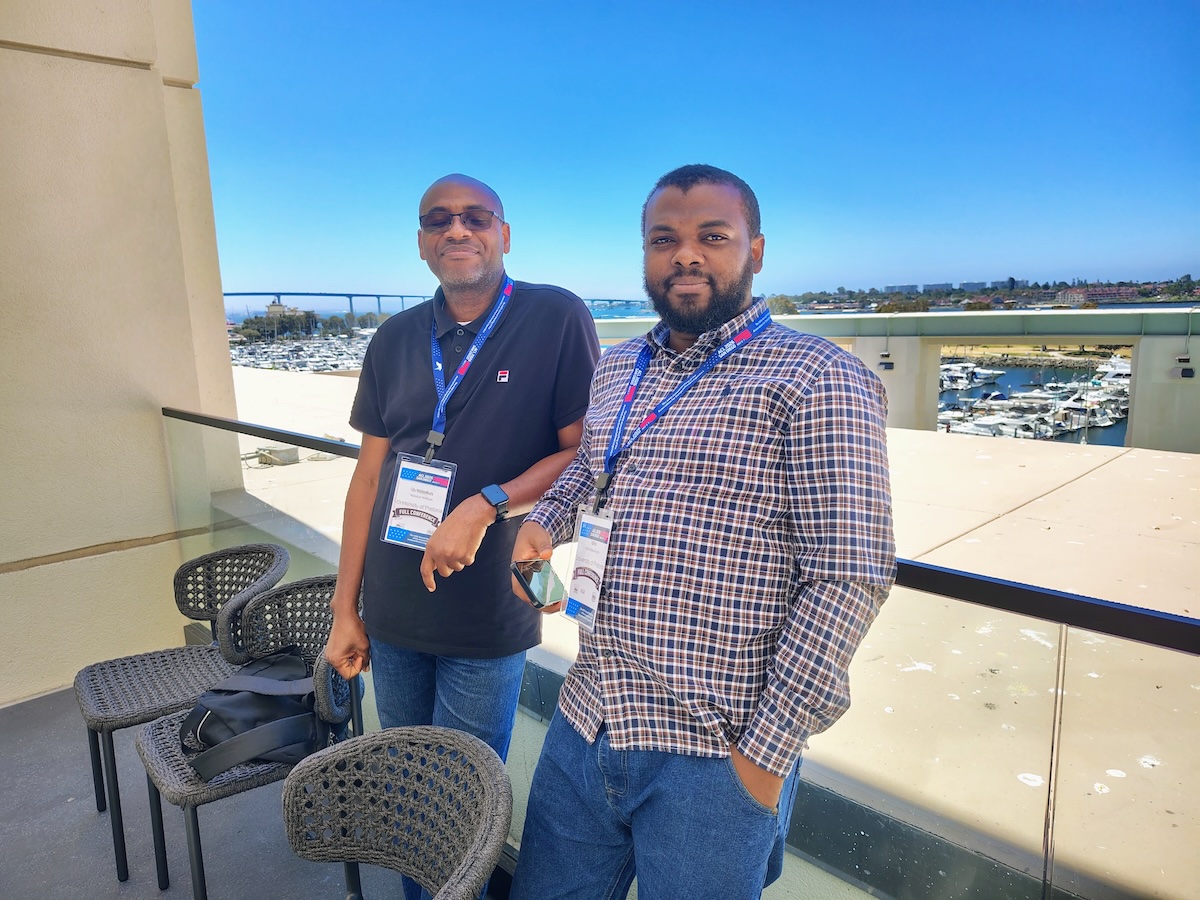
Dr Abdulmumin wasn’t the only DSFSI researcher on the ground at ACL 2026 — Dr Abiodun Modupe was also representing the lab and the AI4D African Languages Lab throughout the conference, connecting with the broader NLP community in San Diego.
For the full list of DSFSI papers and sessions at ACL 2026, see our earlier post: DSFSI and the AI4D African Languages Lab at ACL 2026.
Stay connected with our work:
- DSFSI: https://linktr.ee/dsfsi
- AfriDSAI: https://linktr.ee/afridsai