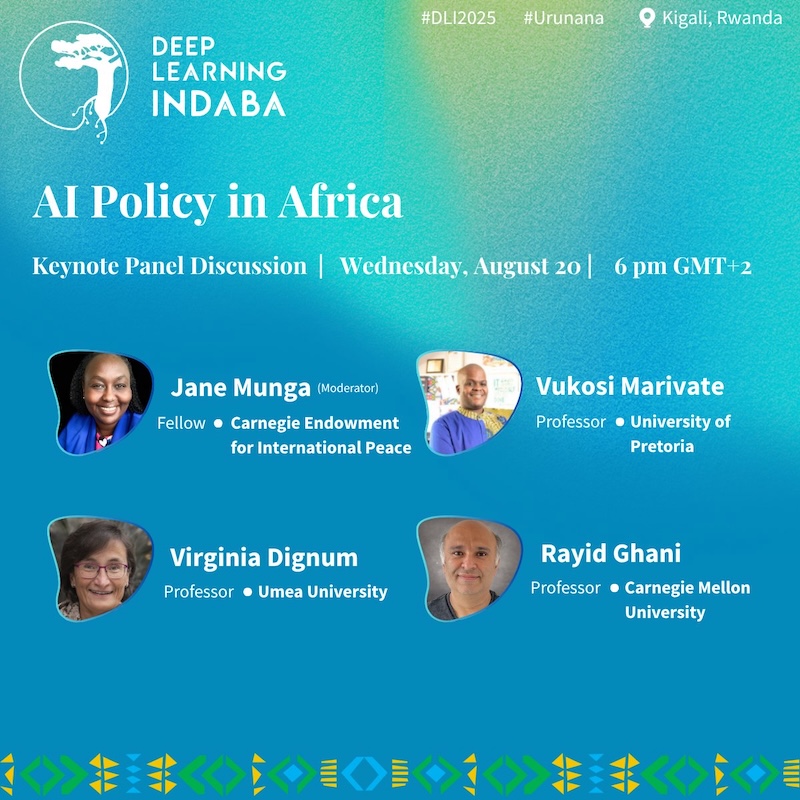
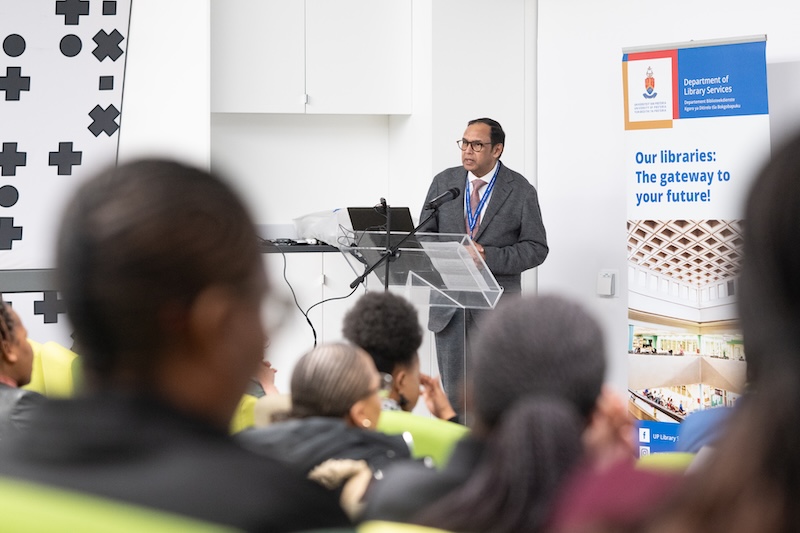
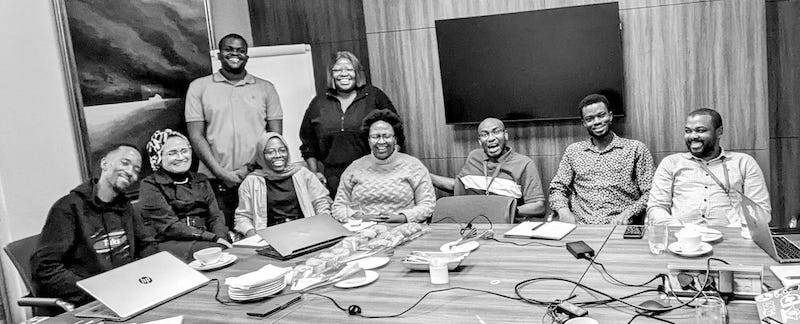
<?xml version="1.0" encoding="utf-8"?><feed xmlns="http://www.w3.org/2005/Atom" ><generator uri="https://jekyllrb.com/" version="3.9.5">Jekyll</generator><link href="https://www.dsfsi.co.za/feed.xml" rel="self" type="application/atom+xml" /><link href="https://www.dsfsi.co.za/" rel="alternate" type="text/html" /><updated>2026-05-15T18:52:47+00:00</updated><id>https://www.dsfsi.co.za/feed.xml</id><title type="html">Data Science for Social Impact</title><subtitle>Data Science for Social Impact @ University of Pretoria</subtitle><entry><title type="html">Harnessing AI for Inclusive and Sustainable Socioeconomic Development</title><link href="https://www.dsfsi.co.za/blog/Harnessing-AI-DSTI-PublicLecture/" rel="alternate" type="text/html" title="Harnessing AI for Inclusive and Sustainable Socioeconomic Development" /><published>2026-05-15T00:00:00+00:00</published><updated>2026-05-15T00:00:00+00:00</updated><id>https://www.dsfsi.co.za/blog/Harnessing-AI-DSTI-PublicLecture</id><content type="html" xml:base="https://www.dsfsi.co.za/blog/Harnessing-AI-DSTI-PublicLecture/"><![CDATA[<p>On May 15, 2026, Prof Vukosi Marivate presented a public lecture during the DSTI Budget Vote. The talk centered on a critical reality: while South Africa leads the continent in AI readiness, the “AI Revolution” will not automatically benefit our people without a deliberate, locally-funded foundation.</p>

<h3 id="the-presentation"><strong>The Presentation</strong></h3>

<p>You can view the full slide deck here:
<strong><a href="https://docs.google.com/presentation/d/1bR_1H2c-9Ak6KuBTtFKQ86dhgZieSCd-JOSn4Imcs_c/edit?usp=sharing">View Slides: Harnessing AI for Inclusive Development</a></strong></p>

<hr />

<h3 id="key-takeaways"><strong>Key Takeaways</strong></h3>

<h4 id="1-technology-as-a-multiplier-toyamas-law"><strong>1. Technology as a Multiplier (Toyama’s Law)</strong></h4>
<p>One of the core themes of the lecture is that AI is not a “magic fix” for social challenges. According to Kentaro Toyama’s <strong>Law of Amplification</strong>, technology is a multiplicative force. It amplifies existing human intent and institutional capacity.</p>
<ul>
  <li>If our R&amp;D capacity and education systems are strong, AI will amplify that progress.</li>
  <li>If they are weak, AI will only amplify existing inequalities.</li>
</ul>

<h4 id="2-the-rd-investment-gap"><strong>2. The R&amp;D Investment Gap</strong></h4>
<p>To move from being “consumers” of AI to “shapers” of it, South Africa must address the current funding disparity.</p>
<ul>
  <li><strong>The Reality:</strong> South Africa currently spends <strong>0.61% of GDP</strong> on R&amp;D.</li>
  <li><strong>The Goal:</strong> The National Development Plan (NDP) target is <strong>1.5%</strong>.</li>
  <li><strong>The Call to Action:</strong> We cannot rely solely on the public purse. The private sector must step up to invest in local AI R&amp;D to bridge this gap.</li>
</ul>

<h4 id="3-a-decade-of-grassroots-agency"><strong>3. A Decade of Grassroots Agency</strong></h4>
<p>African AI is not going to build itself. The progress we see today—highlighted by our <strong>#1 ranking in AI Talent Readiness</strong> (Stanford HAI 2025)—is the result of a decade of work by grassroots movements like the <strong>Deep Learning Indaba</strong> and <strong>Masakhane</strong>.</p>

<h3 id="educational-resources"><strong>Educational Resources</strong></h3>

<p>If this lecture sparked your interest in understanding how AI works or how you can build it, you don’t need a PhD to get started. Here are some of the best accessible resources:</p>

<p><strong>Foundational Learning (No Coding Required)</strong></p>
<ul>
  <li><strong><a href="https://www.coursera.org/learn/ai-for-everyone">AI for Everyone (DeepLearning.AI)</a>:</strong> Taught by Andrew Ng, this is the gold standard for understanding what AI can and cannot do, and how to spot opportunities to apply it.</li>
  <li><strong><a href="https://www.elementsofai.com/">Elements of AI</a>:</strong> A brilliant, free online course created by the University of Helsinki designed to demystify AI for the general public.</li>
</ul>

<p><strong>Open Books &amp; Accessible Reading</strong></p>
<ul>
  <li><strong><a href="https://vas3k.com/blog/machine_learning/">Machine Learning for Everyone (by Vas3k)</a>:</strong> A brilliantly illustrated, jargon-free online guide that explains how different machine learning algorithms work using simple, real-world analogies.</li>
  <li><strong><a href="https://data-feminism.mitpress.mit.edu/">Data Feminism (MIT Press Open Access)</a>:</strong> An open-access book by Catherine D’Ignazio and Lauren F. Klein that perfectly complements Kentaro Toyama’s “Law of Amplification.” It explores how data science can either reinforce inequalities or be used to challenge them—essential reading for understanding inclusive AI.</li>
</ul>

<p><strong>For Aspiring African Builders</strong></p>
<ul>
  <li><strong><a href="https://zindi.africa/learn">Zindi Learning</a>:</strong> Zindi is the largest network of data scientists in Africa. Their learning section offers tutorials and datasets specific to African challenges.</li>
  <li><strong><a href="https://www.masakhane.io/">Masakhane NLP Resources</a>:</strong> For those interested in language technology, explore how this grassroots community builds tools for African languages.</li>
  <li><strong><a href="https://course.fast.ai/">Fast.ai</a>:</strong> If you are ready to write code, this free course is famous for getting beginners building practical, state-of-the-art models quickly.</li>
</ul>

<h3 id="further-reading--organisations"><strong>Further Reading &amp; Organisations</strong></h3>

<p>To stay involved with the work we are doing at the University of Pretoria and across the continent, please visit:</p>

<ul>
  <li><strong><a href="https://www.up.ac.za/afridsai">AfriDSAI</a>:</strong> The African Institute for Data Science and AI.</li>
  <li><strong><a href="https://www.dsfsi.co.za">DSFSI Lab</a>:</strong> Data Science for Social Impact research group.</li>
  <li><strong><a href="https://lelapa.ai">Lelapa AI</a>:</strong> An African-centric AI research and product lab. (Disclosure: Prof Vukosi Marivate is a co-founder)</li>
  <li><strong><a href="https://deeplearningindaba.com">Deep Learning Indaba</a>:</strong> Strengthening African Machine Learning.</li>
  <li><strong><a href="https://dsup.substack.com/">Join our Newsletter</a>:</strong> Weekly updates from our research group.</li>
</ul>]]></content><author><name></name></author><category term="Research" /><category term="AI" /><category term="Policy" /><category term="DSTI" /><category term="South Africa" /><category term="African NLP" /><category term="R&amp;D" /><summary type="html"><![CDATA[On May 15, 2026, Prof Vukosi Marivate presented a public lecture during the DSTI Budget Vote. The talk centered on a critical reality: while South Africa leads the continent in AI readiness, the “AI Revolution” will not automatically benefit our people without a deliberate, locally-funded foundation.]]></summary><media:thumbnail xmlns:media="http://search.yahoo.com/mrss/" url="https://www.dsfsi.co.za/images/2026-05-15-SustainableAfricanAI-Public.jpg" /><media:content medium="image" url="https://www.dsfsi.co.za/images/2026-05-15-SustainableAfricanAI-Public.jpg" xmlns:media="http://search.yahoo.com/mrss/" /></entry><entry><title type="html">Strengthening South Africa’s AI Governance: Prof. Vukosi Marivate to Address DSTI Budget Vote and Join DCDT Expert Panel</title><link href="https://www.dsfsi.co.za/blog/DSTI-PublicLecture-DCDT-Expert/" rel="alternate" type="text/html" title="Strengthening South Africa’s AI Governance: Prof. Vukosi Marivate to Address DSTI Budget Vote and Join DCDT Expert Panel" /><published>2026-05-13T00:00:00+00:00</published><updated>2026-05-13T00:00:00+00:00</updated><id>https://www.dsfsi.co.za/blog/DSTI-PublicLecture-DCDT-Expert</id><content type="html" xml:base="https://www.dsfsi.co.za/blog/DSTI-PublicLecture-DCDT-Expert/"><![CDATA[<p>As South Africa navigates the complexities of the digital era, the intersection of technological innovation and national policy has become increasingly critical. We are pleased to announce two significant milestones involving our PI, Professor Vukosi Marivate, which underscore our commitment to driving evidence-based AI policy in the region.</p>

<h3 id="addressing-the-dsti-budget-vote-ai-for-inclusive-development">Addressing the DSTI Budget Vote: AI for Inclusive Development</h3>

<p>On <strong>Friday, 15 May 2026</strong>, Professor Vukosi Marivate will deliver a public lecture prior to the Department of Science, Technology and Innovation (DSTI) Budget Vote.</p>

<p>The lecture, titled <strong>“Harnessing AI for Inclusive and Sustainable Socioeconomic Development,”</strong> will address the fundamental question of how AI can be transitioned from a purely technological pursuit into a tool for social equity and sustainable growth. This presentation comes at a vital moment as the DSTI outlines its fiscal priorities and strategic direction for the coming year.</p>

<h3 id="appointment-to-the-dcdt-independent-expert-review-panel">Appointment to the DCDT Independent Expert Review Panel</h3>

<p>In a parallel effort to formalize the regulatory landscape of the country, Professor Marivate has been appointed to the <strong>Independent Expert Review Panel</strong> under the Department of Communications and Digital Technologies (DCDT).</p>

<p>The panel is tasked with reviewing the national AI policy to ensure it is grounded in rigorous evidence and aligned with South Africa’s strategic priorities. The appointment aims to bridge the gap between technical research and actionable governance.</p>

<p>The panel comprises a multidisciplinary group of distinguished experts:</p>

<ul>
  <li><strong>Professor Benjamin Rosman</strong> (Chair)</li>
  <li><strong>Professor Vukosi Marivate</strong></li>
  <li><strong>Professor Alison Gildwald</strong></li>
  <li><strong>Ms. Heather Irvine</strong></li>
  <li><strong>Dr. Tshepo Feela</strong></li>
  <li><strong>Dr. Jabu Mtsweni</strong></li>
  <li><strong>Advocate Lufuno Tshikalange</strong></li>
</ul>

<blockquote>
  <p>“This distinguished group of experts will ensure that the policy we reintroduce for public comment will be based on the best available evidence and aligned with South Africa’s priorities.” — <em>DCDT Announcement</em></p>
</blockquote>

<h3 id="looking-ahead">Looking Ahead</h3>

<p>These dual engagements represent a significant step forward in the movement to shape a responsible, ethical, and inclusive AI ecosystem in South Africa. By participating in both the budgetary discussions and the policy review process, we aim to ensure that the future of African AI is shaped by research that is both technically sound and socially impactful.</p>

<hr />
<p>*For more updates on our research and policy engagements, please subscribe to our newsletter or follow us on <a href="https://linktr.ee/dsfsi">https://linktr.ee/dsfsi</a></p>]]></content><author><name>DSFSI</name></author><category term="News" /><category term="AI Policy" /><category term="AI" /><category term="South Africa" /><category term="DSTI" /><category term="DCDT" /><category term="Governance" /><category term="Socioeconomic Development" /><summary type="html"><![CDATA[As South Africa navigates the complexities of the digital era, the intersection of technological innovation and national policy has become increasingly critical. We are pleased to announce two significant milestones involving our PI, Professor Vukosi Marivate, which underscore our commitment to driving evidence-based AI policy in the region.]]></summary></entry><entry><title type="html">Building Bridges: Reflections from the 2026 AI4D African Languages Lab Workshop</title><link href="https://www.dsfsi.co.za/blog/ai4d-25-mar/" rel="alternate" type="text/html" title="Building Bridges: Reflections from the 2026 AI4D African Languages Lab Workshop" /><published>2026-03-31T00:00:00+00:00</published><updated>2026-03-31T00:00:00+00:00</updated><id>https://www.dsfsi.co.za/blog/ai4d-25-mar</id><content type="html" xml:base="https://www.dsfsi.co.za/blog/ai4d-25-mar/"><![CDATA[<p>What does the future of African AI look like? If our recent <strong>AI4D African Languages Lab Workshop</strong> held on March 26, 2026, is any indication, it looks collaborative, resilient, and deeply human-centered.</p>

<p>Over the course of the day, we gathered a vibrant community of researchers, legal experts, linguists, and industry partners to tackle one of the most critical challenges of our time: <strong>unlocking the potential of African languages in the digital age.</strong></p>

<h3 id="celebrating-18-months-of-impact"><strong>Celebrating 18 Months of Impact</strong></h3>
<p>The workshop was preceded by a special evening celebration at Pure Cafe on March 25, 2026. This gathering served as both a reflection on our first 18 months and a celebration of the community that makes this lab possible.</p>

<p>It was an evening of interdisciplinary dialogue, featuring perspectives from university leadership, including <strong>Prof. James Maina (Deputy Dean of EBIT)</strong> and <strong>Prof. Kevin Thomas (Dean of Humanities)</strong>, who underscored that the intersection of engineering and the humanities is the only path forward for building inclusive technology. We were also honored by contributions from our strategic partners, including <strong>Leanne Jones (British High Commission)</strong>, <strong>Matthew Smith (IDRC)</strong>, and <strong>Prof. Langa Khumalo (SADiLaR)</strong>, who reflected on the lab’s regional impact. Representatives from <strong>DSAC, DSTI, and DCDT</strong> provided a crucial government perspective, ensuring our work aligns with South Africa’s national digital transformation strategies.</p>

<p>The evening was a testament to the fact that while the research is technical, the success of the AI4D African Languages Lab is fundamentally built on the strength of our human connections.</p>

<h3 id="workshop-recording-archive"><strong>Workshop Recording Archive</strong></h3>
<p>You can watch the full playlist of the workshop sessions here:
<a href="https://www.youtube.com/playlist?list=PLSQgWNK_M4a-uARnV2QpsFfQG6wEH-qmA"><strong>AI4D Workshop 2026 YouTube Playlist</strong></a></p>

<h4 id="framing-the-mission"><strong>Framing the Mission</strong></h4>
<p><strong>Prof. Vukosi Marivate (PI, AI4D Lab)</strong> opened the workshop by framing the lab’s ambitious mission. He reflected on the progress made since our December 2024 kickoff, emphasizing the dual goal of building human capacity and fostering cross-continental partnerships.</p>

<div class="video-container">
  <iframe width="560" height="315" src="https://www.youtube.com/embed/Pdit87cjTlc" frameborder="0" allowfullscreen=""></iframe>
</div>

<h4 id="bridging-research-and-reality"><strong>Bridging Research and Reality</strong></h4>
<p>Our first panel, moderated by <strong>Prof. Chijioke Okorie (Data Science Law Lab, UP)</strong>, tackled the practicalities of the language pipeline. <strong>Dr. Mpho Monareng (Unisa)</strong>, <strong>Jessica Mabaso (SADiLaR)</strong>, <strong>Puleng Plessie (Javett)</strong>, and <strong>Dunisani Ntsanwisi (Nthavela Community Media)</strong> shared insights on the necessity of high-quality datasets and the importance of aligning research with national policy.</p>
<div class="video-container">
  <iframe width="560" height="315" src="https://www.youtube.com/embed/vkbWSs34JRE" frameborder="0" allowfullscreen=""></iframe>
</div>

<h4 id="technical-deep-dives-nlp-and-applied-systems"><strong>Technical Deep Dives: NLP and Applied Systems</strong></h4>
<ul>
  <li><strong>Core NLP Research:</strong> <strong>Tebogo Macucwa</strong> introduced lexical sets for evaluating embeddings; <strong>Fiskani Banda</strong> analyzed failures in RAG; <strong>Abebe Tegene</strong> presented innovations in word embedding models; and <strong>Penelope Matloga</strong> discussed optimizing pseudo-labelling.
    <ul>
      <li><a href="https://www.youtube.com/watch?v=MjwOCAWpe6c">Watch Rapid Talks (Part 1)</a></li>
    </ul>
  </li>
  <li><strong>Applied AI &amp; Systems:</strong> Moderated by <strong>Prof. Mapundi Banda (UP)</strong>, this session featured <strong>Nontokozo Manukuza</strong> on <em>isiZulu</em> idioms; <strong>Miehleketo Mathebula</strong> on ESG financial intelligence; <strong>Dinorego Mphogo</strong> on Air Traffic Control systems; and <strong>Thapelo Sindane</strong> on <em>Dipolelo</em> (Sign Language benchmarking).
    <ul>
      <li><a href="https://www.youtube.com/watch?v=Baw8S1OX05M">Watch Rapid Talks (Part 2)</a></li>
    </ul>
  </li>
</ul>

<h4 id="security-integrity-and-ethical-strategy"><strong>Security, Integrity, and Ethical Strategy</strong></h4>
<ul>
  <li><strong>Cybersecurity in NLP:</strong> <strong>Prof. Hein Venter (UP)</strong> provided a specialized spotlight on the intersection of cybersecurity and digital forensics, arguing that if the first era of AI was defined by scale, the next must be defined by resilience. <a href="https://www.youtube.com/watch?v=0bD98l14qcs">Watch</a></li>
  <li><strong>Research to Systems &amp; Integrity:</strong> Featuring <strong>Dr. Tsosheletso Chidi (UP)</strong>, <strong>Dr. Devon Jarvis (Wits)</strong>, and <strong>Dr. Mpho Monareng (Unisa)</strong>, alongside a guest talk by <strong>Matthew Smith (IDRC)</strong>. <a href="https://www.youtube.com/watch?v=wKLvI1ymQr4">Watch</a></li>
  <li><strong>Ethics, Law &amp; Deployment:</strong> Moderated by <strong>Seani Rananga (UP)</strong>, featuring <strong>Kutnjem Hamza Monkaree</strong>, <strong>Zinzi Shabangu</strong>, and <strong>Hannah Brown</strong>. <a href="https://www.youtube.com/watch?v=LNrtHS7Q06Q">Watch</a></li>
</ul>

<h3 id="a-call-to-action"><strong>A Call to Action</strong></h3>
<p>We are at an inflection point. African innovation is world-class, but it must be built on stewardship rather than extraction.</p>

<p><strong>How can you join us?</strong></p>
<ol>
  <li><strong>Collaborate:</strong> Reach out to the <a href="dsfsi.co.za/ai4d-language-lab/">AI4D African Languages Lab</a> to explore research partnerships.</li>
  <li><strong>Learn from the Experts:</strong> Download our collaborative playbook: <a href="https://data.org/reports/digitisation-of-oral-data-for-nlp-of-low-resource-languages/">Digitisation of Oral Data for NLP of Low-Resource Languages</a>.</li>
  <li><strong>Explore Our Previous Milestones:</strong>
    <ul>
      <li><a href="https://www.dsfsi.co.za/blog/swip/">SWIP Collaboration</a></li>
      <li><a href="https://www.dsfsi.co.za/blog/hundzula/">Hundzula NLP Retreat Vision</a></li>
      <li><a href="https://www.dsfsi.co.za/blog/Reflecting-on-the-Hundzula-NLP/">Reflecting on the Hundzula NLP Retreat</a></li>
      <li><a href="https://www.dsfsi.co.za/blog/library-dsfsi-abstracts/">Library of DSFSI Abstracts</a></li>
    </ul>
  </li>
</ol>

<h4 id="with-gratitude"><strong>With Gratitude</strong></h4>
<p>This work would not be possible without the generous support of our funders, the <strong>International Development Research Centre (IDRC)</strong> and the <strong>UK’s Foreign, Commonwealth and Development Office (FCDO)</strong>. We remain committed to building an AI ecosystem that is equitable, transparent, and built by the communities it serves.</p>]]></content><author><name></name></author><category term="workshop" /><summary type="html"><![CDATA[What does the future of African AI look like? If our recent AI4D African Languages Lab Workshop held on March 26, 2026, is any indication, it looks collaborative, resilient, and deeply human-centered.]]></summary><media:thumbnail xmlns:media="http://search.yahoo.com/mrss/" url="https://www.dsfsi.co.za/images/ai4d-25-mar-workshop.jpg" /><media:content medium="image" url="https://www.dsfsi.co.za/images/ai4d-25-mar-workshop.jpg" xmlns:media="http://search.yahoo.com/mrss/" /></entry><entry><title type="html">CommonLID: A New Benchmark for Cross-Lingual Speech Identification – and Our Contribution from the University of Pretoria</title><link href="https://www.dsfsi.co.za/blog/commonlid/" rel="alternate" type="text/html" title="CommonLID: A New Benchmark for Cross-Lingual Speech Identification – and Our Contribution from the University of Pretoria" /><published>2026-03-16T00:00:00+00:00</published><updated>2026-03-16T00:00:00+00:00</updated><id>https://www.dsfsi.co.za/blog/commonlid</id><content type="html" xml:base="https://www.dsfsi.co.za/blog/commonlid/"><![CDATA[<p>The landscape of cross-lingual speech identification (CLSI) is rapidly evolving, and a new preprint, <a href="https://arxiv.org/abs/2601.18026">CommonLID</a>, promises to significantly advance the field.  This initiative represents a collaborative effort involving a vast network of researchers and institutions, and the University of Pretoria (UP) played a key role in its development.</p>

<p><strong>What is CommonLID?</strong></p>

<p>CommonLID aims to provide a comprehensive and standardized benchmark for evaluating CLSI systems.  It addresses a critical need: existing datasets often focus on a limited number of languages, or lack sufficient diversity to accurately reflect real-world scenarios. CommonLID tackles this by encompassing a far broader range of languages, particularly focusing on under-resourced African languages. The dataset includes both “core” languages (those already well-represented in existing research) and a large number of African languages.</p>

<p><strong>The Challenge of African Languages</strong></p>

<p>As highlighted in the CommonLID work, existing large language models (LLMs) like GPT-5 struggle significantly when applied to African languages in a CLSI setting. The performance gap is substantial, reaching as much as 30% lower F1 scores compared to their performance on core languages. This underscores the importance of datasets like CommonLID that prioritize these languages and drive development of models more attuned to their unique characteristics.</p>

<p><strong>University of Pretoria’s Contribution</strong></p>

<p>The University of Pretoria, under the leadership of Dr. Idris Abdulmumin at the DSFSI (Data Science for Social Impact), spearheaded the coordination of the project and the establishment of the associated shared tasks. This involved significant logistical and organizational efforts, ensuring a smooth and collaborative process for the diverse team of researchers involved.  This effort aligns with UP’s commitment to leveraging data science for addressing critica social challenges within Africa and beyond.  A large consortium of institutions contributed to the work.</p>

<p><strong>Key Highlights from the CommonLID Paper</strong></p>

<ul>
  <li><strong>Scale and Diversity:</strong>  The dataset represents a significant expansion in the number of languages included in CLSI benchmarks.</li>
  <li><strong>Focus on African Languages:</strong>  A dedicated focus on African languages addresses a critical gap in existing resources.</li>
  <li><strong>Performance Disparity:</strong>  The paper reveals a significant performance gap between LLMs and specialized models (like GlotLID) when dealing with African languages. GlotLID, despite requiring more resources, outperforms GPT-5 by a considerable margin in this context.</li>
  <li><strong>Shared Tasks:</strong> The creation of shared tasks fosters collaboration and accelerates progress in CLSI research.</li>
</ul>

<p><strong>Looking Ahead</strong></p>

<p>CommonLID represents a pivotal step towards building more robust and inclusive CLSI systems. The work from the University of Pretoria and the broader collaborative effort will serve as a foundation for future research, particularly in developing models that can effectively handle the challenges presented by under-resourced languages.  We anticipate that CommonLID will become an essential resource for researchers in NLP, data science,</p>]]></content><author><name>DSFSI Lab</name></author><summary type="html"><![CDATA[The landscape of cross-lingual speech identification (CLSI) is rapidly evolving, and a new preprint, CommonLID, promises to significantly advance the field. This initiative represents a collaborative effort involving a vast network of researchers and institutions, and the University of Pretoria (UP) played a key role in its development.]]></summary></entry><entry><title type="html">Advancing AI Governance Alignment in the AMET Region: Contribution from AfriDSAI Fellow Seani Rananga</title><link href="https://www.dsfsi.co.za/blog/seani-amet-policy/" rel="alternate" type="text/html" title="Advancing AI Governance Alignment in the AMET Region: Contribution from AfriDSAI Fellow Seani Rananga" /><published>2026-03-03T00:00:00+00:00</published><updated>2026-03-03T00:00:00+00:00</updated><id>https://www.dsfsi.co.za/blog/seani-amet-policy</id><content type="html" xml:base="https://www.dsfsi.co.za/blog/seani-amet-policy/"><![CDATA[<p>The Data Science for Social Impact (DSFSI) Lab at the :contentReference[oaicite:0]{index=0} is pleased to highlight the contribution of <strong>Seani Rananga</strong>, an <strong>AfriDSAI Fellow</strong>, to the policy report:</p>

<h2 id="toward-ai-governance-alignment-in-africa-middle-east-and-türkiye-amet-region">Toward AI Governance Alignment in Africa, Middle East and Türkiye (AMET Region)</h2>

<p>Published by the :contentReference[oaicite:1]{index=1}, the report examines pathways toward regulatory coherence and governance alignment across the AMET region. It provides a structured analysis of emerging AI policy frameworks, institutional capacity constraints, and opportunities for regional collaboration.</p>

<hr />

<h2 id="why-governance-alignment-matters-now">Why Governance Alignment Matters Now</h2>

<p>AI systems are increasingly embedded in public sector decision-making, financial systems, healthcare delivery, and digital infrastructure. Across Africa and the broader AMET region, regulatory development is accelerating — but often in fragmented and uneven ways.</p>

<p>Without coordination and shared standards:</p>

<ul>
  <li>Regulatory fragmentation can slow innovation and cross-border cooperation</li>
  <li>Capacity gaps can undermine enforcement and oversight</li>
  <li>Imported governance models may fail to reflect local legal and socio-economic realities</li>
</ul>

<p>The AMET report responds directly to these challenges by outlining principles for <strong>regionally grounded, internationally aligned AI governance frameworks</strong>.</p>

<hr />

<h2 id="positioning-african-institutions-in-global-ai-governance">Positioning African Institutions in Global AI Governance</h2>

<p>Seani’s contribution reflects the strategic priorities of the :contentReference[oaicite:2]{index=2} (AfriDSAI) and DSFSI:</p>

<h3 id="1️⃣-strengthening-african-policy-voice">1️⃣ Strengthening African Policy Voice</h3>
<p>AI governance norms are being shaped globally at speed. African institutions must actively participate in defining standards rather than passively adopting external frameworks.</p>

<h3 id="2️⃣-integrating-technical-and-regulatory-expertise">2️⃣ Integrating Technical and Regulatory Expertise</h3>
<p>Effective AI governance requires deep technical understanding of machine learning systems alongside legal, ethical, and institutional insight. DSFSI’s interdisciplinary approach positions the University of Pretoria to contribute meaningfully to this interface.</p>

<h3 id="3️⃣-supporting-regional-institutional-capacity">3️⃣ Supporting Regional Institutional Capacity</h3>
<p>Governance alignment is not simply about regulation — it is about building durable institutions, regulatory capability, and cross-border collaboration mechanisms across the AMET region.</p>

<p>Through AfriDSAI, the University of Pretoria is developing expertise that spans AI research, evaluation, policy engagement, and societal impact — strengthening South Africa’s and the continent’s role in shaping responsible AI futures.</p>

<hr />

<h2 id="about-the-report">About the Report</h2>

<p>The report provides:</p>

<ul>
  <li>A regional mapping of AI governance initiatives</li>
  <li>Analysis of regulatory divergence and alignment opportunities</li>
  <li>Recommendations for cooperative policy development</li>
  <li>Considerations for sustainable governance infrastructure</li>
</ul>

<p>📖 <strong>Read the full report:</strong><br />
<a href="https://www.globalcenter.ai/research/toward-ai-governance-alignment-in-africa-middle-east-and-tuerkiye-amet-region">https://www.globalcenter.ai/research/toward-ai-governance-alignment-in-africa-middle-east-and-tuerkiye-amet-region</a></p>

<hr />

<p>As AI governance frameworks evolve globally, contributions from African researchers and policy practitioners are essential to ensuring that regulatory models reflect regional realities, development priorities, and institutional contexts.</p>

<p>We congratulate AfriDSAI Fellow Seani Rananga on this important policy contribution and look forward to continued engagement at the intersection of AI, governance, and societal transformation.</p>]]></content><author><name>DSFSI Lab</name></author><category term="AI Governance" /><category term="Policy" /><category term="Research" /><category term="AI Governance" /><category term="AMET" /><category term="AfriDSAI" /><category term="DSFSI" /><category term="University of Pretoria" /><summary type="html"><![CDATA[The Data Science for Social Impact (DSFSI) Lab at the :contentReference[oaicite:0]{index=0} is pleased to highlight the contribution of Seani Rananga, an AfriDSAI Fellow, to the policy report:]]></summary><media:thumbnail xmlns:media="http://search.yahoo.com/mrss/" url="https://www.dsfsi.co.za/images/amet-gov.png" /><media:content medium="image" url="https://www.dsfsi.co.za/images/amet-gov.png" xmlns:media="http://search.yahoo.com/mrss/" /></entry><entry><title type="html">Hundzula in Mafikeng: From the Place of Rocks to the Future of African Languages</title><link href="https://www.dsfsi.co.za/blog/hundzula/" rel="alternate" type="text/html" title="Hundzula in Mafikeng: From the Place of Rocks to the Future of African Languages" /><published>2026-02-16T00:00:00+00:00</published><updated>2026-02-16T00:00:00+00:00</updated><id>https://www.dsfsi.co.za/blog/hundzula</id><content type="html" xml:base="https://www.dsfsi.co.za/blog/hundzula/"><![CDATA[<p>An Interdisciplinary Retreat Exploring African NLP and Linguistics</p>

<p>The Hundzula retreat brought together scholars, researchers, linguists and data scientists to explore the evolving landscape of African language research. Over the course of workshops, seminars and a panel discussion, participants explored dictionary development, language technologies, language processing and the development of language resources. The retreat highlighted the importance of interdisciplinary and collaborative approaches to advance African languages.</p>

<p><strong>Keynote Insights</strong></p>

<p>The retreat featured a series of thought-provoking keynote addresses that highlighted the challenges that exist in language research, African linguistics and data science.</p>

<ul>
  <li>Dr Luyanduhlobo Makwati (University of Zimbabwe) explored the complexities posed by polysemous words in cross-border languages in Natural Language Processing and Linguistics</li>
  <li>Dr Alaa Aldein Mohamed Suliman Ibrahim (University of KwaZulu-Natal) discussed Data-Driven Machine Learning Models for E. coli Concentrations Prediction.</li>
  <li>Dr Kea Seshoka (North-West University) delivered a keynote highlighting how “low resource” languages are in fact rich in resources that have simply not yet been digitised.</li>
</ul>

<p>Collectively, the keynote presentations set a strong intellectual foundation for the retreat, reinforcing the need for interdisciplinary collaboration, digitisation, and context-aware approaches in advancing African language research and technologies.</p>

<p><strong>Datasets and Data Development initiatives</strong></p>

<p>In addition to the keynotes, the retreat highlighted a variety of innovative, data development initiatives that enhance African language research and digitisation.</p>

<ul>
  <li>Ntshwaki Malatji discussed <em>Building a Corpus of Everyday Spoken Khelobedu for Linguistic Analysis and Orthography Development.</em></li>
  <li>Mokgadi Mathole – introduced <em>a “living dictionary” as a tool for developing and digitising under-resourced African languages: a case of Khelobedu.</em></li>
  <li>Dr Nts’oeu Seepheephe – presented work on <em>a Dictionary of Lesotho English: Collecting and Describing Local and Sesotho-Derived Vocabulary.</em></li>
</ul>

<p><strong>Learning in Practice: Seminars and Workshops</strong></p>

<p>Three practical demonstrations were conducted, allowing participants hands-on exposure to the techniques and tools in African language research and technology.</p>

<ul>
  <li>Makhamisa Senekhane discussed Automatic extraction of tone using Sesotho as a base.</li>
  <li>Marissa Griesel addressed Data annotation.</li>
  <li>Prof Sree Ganesh Thotempudi explored The Power of Large Language Models (LLMs) in the Social Sciences.</li>
</ul>

<p>Unexpected Highlights:</p>

<p>One of the unexpected highlights of the retreat was the dedicated panel discussion on post graduate studies in interdisciplinary programmes. The session provided a rare opportunity to explore supervision-related challenges. The panel highlighted the importance of mentorship and interdisciplinary collaboration.  Key contributions came from both postgraduate participants and supervisors, including, Dr Sibeko and Dr Marongedze.</p>

<p>Another standout moment was Dr Keaobaka Seshoka’s keynote, which challenged the framing of “low-resource languages.” Dr. Seshoka argued that the label is derogatory and implicitly suggests that these languages are inherently limited in capability.</p>

<p>In addition, we introduced a new initiative at this year’s retreat: the issuance of attendance certificates to all participants. This gesture was warmly received and served as a formal acknowledgement of everyone’s engagement and contribution. A sample certificate is included below.</p>

<p>It is also important to highlight that through Hundzula and other collaborative efforts, we are proud to have celebrated the graduation of one PhD candidate, Dr Dan Masethe, who completed his doctorate through Hundzula and graduated at last year’s Spring Graduation ceremony. This milestone reflects the growing impact of our collaborative initiatives and our commitment to advancing postgraduate scholarship.</p>

<p>Lightning Talks</p>

<p>Given the large number of attendees, presentation formats for the session were restricted to key notes and lightning talks, which proved to be an effective approach as it enhanced participation whilst fostering collaboration and knowledge sharing across multiple disciplines.</p>

<p>Participant feedback:</p>

<p>Attendees praised the retreat’s progressive and collaborative approach.</p>

<ul>
  <li>Khanyisa Zinto (NMU): Appreciated the focus on future directions and actionable collaborations.</li>
  <li>Gontse Mutla (NWU): Highlighted the value of interdisciplinary dialogue in strengthening African language research.</li>
  <li>Hanschen Vanas (NWU): Called for integrated, national approaches to avoid siloed language development.</li>
  <li>Dr Alaa Aldein Mohamed Suliman (UKZN): Emphasised the importance of culturally grounded, community-driven research.</li>
</ul>

<p>Acknowledgements:</p>

<p>We extend our heartfelt appreciation to the organising committee, sponsors, and all participants for their invaluable contributions. The Hundzula Retreat continues to serve as a beacon of innovation in African linguistics and natural language processing, paving the way for impactful work in the years to come.</p>

<p>This workshop was made possible through financial support from UK International Development and the International Development Research Centre (IDRC), Ottawa, Canada, under the AI for Development: Responsible AI, Empowering People (AI4D) programme. This support enabled the sponsorship of participants from the SADC region to attend Hundzula, marking the first time such regional participation was facilitated.</p>

<p><img src="/images/hundzula-2026-SADC.jpeg" alt="SADC Participants" /><br />
<em>SADC Participants</em></p>

<p>The article written by NWU for the Hundzula posted at the NWU news site: <a href="https://news.nwu.ac.za/hundzula-retreat-seeks-practical-digital-solutions-low-resource-african-language">https://news.nwu.ac.za/hundzula-retreat-seeks-practical-digital-solutions-low-resource-african-language</a></p>

<p>We also submitted a paper for RAIL based on Hundzula.</p>]]></content><author><name>Seani Rananga</name></author><category term="retrospective" /><category term="future" /><category term="vision" /><category term="2026" /><category term="2026" /><category term="2025retrospective" /><category term="2026" /><category term="future" /><category term="vision" /><category term="AfriDSAI" /><category term="fellowships" /><category term="African-AI" /><summary type="html"><![CDATA[An Interdisciplinary Retreat Exploring African NLP and Linguistics - Seani Rananga]]></summary><media:thumbnail xmlns:media="http://search.yahoo.com/mrss/" url="https://www.dsfsi.co.za/images/hundzula-2026-group.jpeg" /><media:content medium="image" url="https://www.dsfsi.co.za/images/hundzula-2026-group.jpeg" xmlns:media="http://search.yahoo.com/mrss/" /></entry><entry><title type="html">DSFSI 2025 Retrospective (Day 7): The Road Ahead—2026 and Beyond</title><link href="https://www.dsfsi.co.za/blog/2025-retrospective-day7-looking-forward/" rel="alternate" type="text/html" title="DSFSI 2025 Retrospective (Day 7): The Road Ahead—2026 and Beyond" /><published>2025-11-30T00:00:00+00:00</published><updated>2025-11-30T00:00:00+00:00</updated><id>https://www.dsfsi.co.za/blog/2025-retrospective-day7-looking-forward</id><content type="html" xml:base="https://www.dsfsi.co.za/blog/2025-retrospective-day7-looking-forward/"><![CDATA[<p><em>Day 7 of our 7-day retrospective celebrating DSFSI’s remarkable 2025 journey—and looking ahead to what’s next.</em></p>

<h2 id="the-road-ahead-2026-and-beyond">The Road Ahead: 2026 and Beyond</h2>

<p>Over the past six days, we’ve celebrated:</p>
<ul>
  <li><strong>Research excellence</strong> (Day 1): ACL papers, Mafoko, global recognition</li>
  <li><strong>Visionary leadership</strong> (Day 2): Inaugural lecture, AfriCHI keynote</li>
  <li><strong>Institutional growth</strong> (Day 3): AfriDSAI launch with Google.org support</li>
  <li><strong>Community building</strong> (Day 4): Indaba, global summits, collaborative ecosystems</li>
  <li><strong>Knowledge sharing</strong> (Day 5): Seminars, workshops, capacity building</li>
  <li><strong>Student success</strong> (Day 6): Graduations across PhD, Masters, Honours, and undergraduate levels</li>
</ul>

<p>Now, we look forward.</p>

<h3 id="-what-2025-taught-us">🌅 What 2025 Taught Us</h3>

<p>Before we look ahead, let’s reflect on what this year revealed:</p>

<h4 id="1-african-ai-research-has-come-of-age">1. <strong>African AI Research Has Come of Age</strong></h4>
<p>We’re not “catching up” to global AI—we’re <strong>leading conversations</strong> on ethical data governance (Esethu), community-centered licensing (NOODL), and adaptive NLP systems.</p>

<h4 id="2-institutions-enable-scale">2. <strong>Institutions Enable Scale</strong></h4>
<p>Moving from DSFSI (research group) to AfriDSAI (institute) wasn’t about prestige—it was about creating <strong>infrastructure</strong> to sustain and scale impact across domains and borders.</p>

<h4 id="3-communities-are-our-competitive-advantage">3. <strong>Communities Are Our Competitive Advantage</strong></h4>
<p>From Masakhane to the Deep Learning Indaba to Substack subscribers—<strong>our strength is our networks</strong>. We don’t compete; we collaborate.</p>

<h4 id="4-transdisciplinarity-is-non-negotiable">4. <strong>Transdisciplinarity Is Non-Negotiable</strong></h4>
<p>Medical AI, agricultural AI, climate AI—the biggest challenges require <strong>partnerships across disciplines</strong>, not just better algorithms.</p>

<h4 id="5-the-next-generation-is-ready">5. <strong>The Next Generation Is Ready</strong></h4>
<p>Our students aren’t just learning—they’re <strong>leading</strong>. Publishing at top conferences, organizing workshops, building tools that matter.</p>

<h3 id="-whats-coming-in-2026">🚀 What’s Coming in 2026</h3>

<h4 id="1-afridsai-fellowship-programme-launch">1. AfriDSAI Fellowship Programme Launch</h4>

<p>The <strong>first official AfriDSAI Fellowship Programme</strong> call is coming soon!</p>

<p>This programme will enable:</p>
<ul>
  <li><strong>Staff/Faculty Partnerships</strong> on transdisciplinary research projects
    <ul>
      <li>Collaborations across Computer Science, Medicine, Agriculture, Climate Science, Social Sciences</li>
      <li>Seed funding for pilot projects</li>
      <li>Access to compute infrastructure and datasets</li>
    </ul>
  </li>
  <li><strong>Student Support</strong>
    <ul>
      <li>PhD fellowships focused on African AI challenges</li>
      <li>Postdoctoral positions for emerging scholars</li>
      <li>Visiting scholar programmes connecting African and global researchers</li>
    </ul>
  </li>
  <li><strong>Industry and Civil Society Collaborations</strong>
    <ul>
      <li>Partnerships that ground research in real-world needs</li>
      <li>Co-creation of tools and technologies</li>
      <li>Pathways from research to implementation</li>
    </ul>
  </li>
</ul>

<p><strong>When:</strong> Fellowship call opening <strong>early 2026</strong>
<strong>How to stay informed:</strong> Subscribe to the <a href="https://dsup.substack.com">DS@UP Newsletter</a></p>

<h4 id="2-ongoing-projects-reaching-maturity">2. Ongoing Projects Reaching Maturity</h4>

<p>Several major initiatives will come to fruition in 2026:</p>

<p><strong>ZA-African Next Voices Project</strong></p>
<ul>
  <li><strong>3,000+ hours</strong> of speech data across <strong>7 South African languages</strong></li>
  <li>High-quality, community-consented audio for ASR</li>
  <li><strong>Status:</strong> Released.</li>
</ul>

<p><strong>Digitisation Playbooks</strong></p>
<ul>
  <li>Practical guides for building datasets in African languages</li>
  <li>Community engagement protocols</li>
  <li>Quality assurance frameworks</li>
  <li>Licensing and governance templates</li>
  <li><strong>Status:</strong> Piloting with partner communities</li>
</ul>

<p><strong>Ethical Dataset Licensing Expansion</strong></p>
<ul>
  <li>Scaling NOODL and Esethu frameworks beyond South Africa</li>
  <li>Partnerships with legal scholars across the continent</li>
  <li>Policy engagement on data sovereignty</li>
  <li><strong>Status:</strong> Legal framework refinement ongoing</li>
</ul>

<h4 id="3-partnerships-and-expansions">3. Partnerships and Expansions</h4>

<p><strong>Continental Collaborations:</strong></p>
<ul>
  <li>Strengthening ties with universities across Nigeria, Kenya, Ghana, Rwanda, Egypt, and beyond</li>
  <li>Joint research projects on shared challenges</li>
  <li>Student and faculty exchange programmes</li>
</ul>

<p><strong>Industry Partnerships:</strong></p>
<ul>
  <li>Co-developing tools for real-world deployment</li>
  <li>Internship and career pathways for students</li>
  <li>Research-to-practice pipelines</li>
</ul>

<p><strong>Policy Engagement:</strong></p>
<ul>
  <li>Contributing to African Union AI strategy discussions</li>
  <li>Advising South African government on AI policy</li>
  <li>Participating in global AI governance conversations</li>
</ul>

<h3 id="-our-2026-priorities">🎯 Our 2026 Priorities</h3>

<h4 id="for-dsfsi-research-group">For DSFSI (Research Group):</h4>
<ol>
  <li><strong>Language Technology Innovation</strong></li>
  <li><strong>Open Science Leadership</strong></li>
  <li><strong>Community Capacity Building</strong></li>
</ol>

<h4 id="for-afridsai-institute">For AfriDSAI (Institute):</h4>
<ol>
  <li><strong>Transdisciplinary Research</strong></li>
  <li><strong>Institutional Infrastructure</strong></li>
  <li><strong>Ecosystem Building</strong></li>
</ol>

<h3 id="-immediate-next-steps">🔥 Immediate Next Steps</h3>

<p><strong>For Researchers:</strong></p>
<ul>
  <li>Explore our <a href="https://github.com/dsfsi">open datasets</a> and contribute</li>
  <li>Join the conversation on <a href="https://twitter.com/dsfsi_research">Twitter/X</a> and <a href="https://www.linkedin.com/company/dsfsi/">LinkedIn</a></li>
</ul>

<p><strong>For Students:</strong></p>
<ul>
  <li>Apply for graduate programmes at UP Computer Science (focusing on African AI)</li>
  <li>Engage with our <a href="https://www.dsfsi.co.za/research/">research outputs</a></li>
  <li>Attend our seminars and workshops (announced via newsletter)</li>
</ul>

<p><strong>For Partners (Universities, NGOs, Government, Industry):</strong></p>
<ul>
  <li>Explore collaboration opportunities through <a href="https://www.up.ac.za/afridsai">AfriDSAI</a></li>
  <li>Co-create research agendas addressing shared challenges</li>
  <li>Support fellowship programmes and student scholarships</li>
</ul>

<p><strong>For Community Members:</strong></p>
<ul>
  <li>Subscribe to the <a href="https://dsup.substack.com">DS@UP Newsletter</a></li>
  <li>Follow our journey on <a href="https://linktr.ee/dsfsi">social media</a></li>
  <li>Share our work with networks who might benefit</li>
</ul>

<h3 id="-a-message-of-gratitude">💬 A Message of Gratitude</h3>

<p>This retrospective isn’t just about DSFSI—it’s about <strong>everyone who believed</strong> in this vision:</p>

<ul>
  <li>Students who chose to work on cutting edge problems problems like African languages</li>
  <li>Collaborators who shared data, code, and expertise freely</li>
  <li>Funders who invested in long-term capacity, not quick wins</li>
  <li>Community members who contributed to datasets and validated our work</li>
  <li>Partners across universities, governments, and organizations</li>
  <li>Families who supported late nights and long conferences</li>
</ul>

<p><strong>You made 2025 possible. You’ll make 2026 extraordinary.</strong></p>

<h3 id="-the-invitation">🌟 The Invitation</h3>

<p>African AI isn’t something to wait for—it’s something to <strong>build</strong>.</p>

<p>If you’re a:</p>
<ul>
  <li><strong>Designer, researcher, linguist, or technologist</strong> → Join us</li>
  <li><strong>Student dreaming of impact</strong> → Apply to our programmes</li>
  <li><strong>Institution seeking partnerships</strong> → Reach out</li>
  <li><strong>Funder wanting to invest in African futures</strong> → Let’s talk</li>
  <li><strong>Community member with language expertise</strong> → Collaborate with us</li>
</ul>

<p>Help us bridge the gap between <strong>AI and HCI, data and design, innovation and inclusion</strong>.</p>

<p>Together, we can build <strong>AI that listens before it speaks</strong>—and that reflects the voices, languages, and values of a diverse continent.</p>

<h3 id="-until-next-time">🎬 Until Next Time</h3>

<p>This concludes our <strong>7-day retrospective</strong> of DSFSI’s 2025 journey.</p>

<p>Thank you for following along. Thank you for being part of this community. Thank you for believing that African AI—<strong>built by Africans, for Africa, grounded in African values</strong>—is not just possible, but necessary.</p>

<p>See you in 2026. We have work to do.</p>

<hr />

<p><strong>Retrospective Series:</strong></p>
<ul>
  <li><a href="/blog/2025/11/18/2025-retrospective-day1-research-excellence.html">Day 1: Research Excellence &amp; Global Recognition</a></li>
  <li><a href="/blog/2025/11/19/2025-retrospective-day2-leadership-vision.html">Day 2: Leadership &amp; Vision</a></li>
  <li><a href="/blog/2025/11/20/2025-retrospective-day3-institutional-growth.html">Day 3: Institutional Growth</a></li>
  <li><a href="/blog/2025/11/21/2025-retrospective-day4-community-collaboration.html">Day 4: Community &amp; Collaboration</a></li>
  <li><a href="/blog/2025/11/22/2025-retrospective-day5-knowledge-sharing.html">Day 5: Knowledge Sharing &amp; Capacity Building</a></li>
  <li><a href="/blog/2025/11/23/2025-retrospective-day6-student-success.html">Day 6: Student Success &amp; Graduations</a></li>
  <li><a href="/blog/2025/11/24/2025-retrospective-day7-looking-forward.html">Day 7: Looking Forward</a> ← You are here</li>
</ul>

<p><strong>Stay connected:</strong></p>
<ul>
  <li>🌐 Website: <a href="https://www.dsfsi.co.za">dsfsi.co.za</a></li>
  <li>🐦 Twitter/X: <a href="https://twitter.com/dsfsi_research">@dsfsi_research</a></li>
  <li>💼 LinkedIn: <a href="https://www.linkedin.com/company/dsfsi/">DSFSI</a></li>
  <li>📬 Newsletter: <a href="https://dsup.substack.com">DS@UP on Substack</a></li>
  <li>🔗 All Links: <a href="https://linktr.ee/dsfsi">linktr.ee/dsfsi</a></li>
  <li>🏛️ AfriDSAI: <a href="https://www.up.ac.za/afridsai">up.ac.za/afridsai</a></li>
</ul>

<p><em>From strong roots, new branches grow. From DSFSI to AfriDSAI. From 2025 to 2026 and beyond.</em></p>

<p>#DSFSI2025 #AfriDSAI #AfricanAI #TheFutureIsNow #2026Vision</p>]]></content><author><name>DSFSI Research Group</name></author><category term="retrospective" /><category term="future" /><category term="vision" /><category term="2026" /><category term="2026" /><category term="2025retrospective" /><category term="2026" /><category term="future" /><category term="vision" /><category term="AfriDSAI" /><category term="fellowships" /><category term="African-AI" /><summary type="html"><![CDATA[Day 7 of our retrospective: Looking forward to 2026, upcoming AfriDSAI fellowships, ongoing projects, and the future we're building together.]]></summary><media:thumbnail xmlns:media="http://search.yahoo.com/mrss/" url="https://www.dsfsi.co.za/images/afridsai-hands.png" /><media:content medium="image" url="https://www.dsfsi.co.za/images/afridsai-hands.png" xmlns:media="http://search.yahoo.com/mrss/" /></entry><entry><title type="html">DSFSI 2025 Retrospective (Day 6): Celebrating Our Growing Family—Student Success Stories</title><link href="https://www.dsfsi.co.za/blog/2025-retrospective-day6-student-success/" rel="alternate" type="text/html" title="DSFSI 2025 Retrospective (Day 6): Celebrating Our Growing Family—Student Success Stories" /><published>2025-11-29T00:00:00+00:00</published><updated>2025-11-29T00:00:00+00:00</updated><id>https://www.dsfsi.co.za/blog/2025-retrospective-day6-student-success</id><content type="html" xml:base="https://www.dsfsi.co.za/blog/2025-retrospective-day6-student-success/"><![CDATA[<p><em>Day 6 of our 7-day retrospective celebrating DSFSI’s remarkable 2025 journey.</em></p>

<h2 id="celebrating-our-growing-family">Celebrating Our Growing Family</h2>

<p>Papers matter. Conferences matter. Institutions matter.</p>

<p>But <strong>people</strong> matter most.</p>

<p>The true measure of a research group isn’t publications or grants—it’s the students who walk across graduation stages, dissertations in hand, ready to change the world.</p>

<p>In 2025, DSFSI celebrated the achievements of our <strong>extended family</strong>: students directly supervised within our group, research assistants who became collaborators, teaching assistants who grew into mentors, and the broader community of scholars we’ve supported along the way.</p>

<h3 id="-autumn-2025-graduations-a-moment-to-celebrate">🎓 Autumn 2025 Graduations: A Moment to Celebrate</h3>

<p>The <strong>Autumn 2025 graduation season</strong> at the University of Pretoria brought a moment to pause, reflect, and celebrate. While degrees are awarded individually, they’re achieved within ecosystems of mentorship, collaboration, and mutual support.</p>

<p>At DSFSI, we take pride not only in those directly supervised within our group, but in the <strong>broader environment we create</strong>—one where students, teaching assistants, research assistants, postgraduates, and collaborators across disciplines come together at the intersection of data science, AI, and societal impact.</p>

<h3 id="-phd-graduate-dr-tsosheletso-chidi">🏆 PhD Graduate: Dr. Tsosheletso Chidi</h3>

<p><strong>Dr. Tsosheletso Chidi</strong> earned her PhD with a dissertation on:</p>

<p><strong>Thesis:</strong> <em>Representations of Homosexuality in Indigenous African Languages: An Analysis of Selected Fictional Literary Works by Black Writers</em></p>

<p>This work bridges literature, linguistics, and social justice—examining how identity, sexuality, and language intersect in African contexts.</p>

<h4 id="in-her-own-words">In Her Own Words:</h4>

<blockquote>
  <p>“I would like to give special thanks to the Mellon Foundation Scholarship and my PhD supervisor. My future plans include blending research, literature, and community engagement to build platforms for underrepresented voices. I’m excited to expand the <strong>Dirurubele-Wandering Butterflies writing mentorship programme</strong>, contribute to <strong>multilingual technologies</strong> through my postdoctoral work, and hopefully shape future policies and curricula that center indigenous knowledge and inclusivity.”</p>
</blockquote>

<p>While Dr. Chidi was not supervised directly under DSFSI, we celebrate her as a valued <strong>new DSFSI Fellow</strong> and contributor to our growing transdisciplinary community spanning AI, language, and social impact.</p>

<p>Her work reminds us that language technology isn’t just about speech recognition and translation—it’s about <strong>whose stories get told, whose identities get represented, and whose voices get heard</strong>.</p>

<h3 id="-masters-graduates-advancing-african-nlp">📚 Masters Graduates: Advancing African NLP</h3>

<h4 id="miehleketo-mathebula">Miehleketo Mathebula</h4>
<p><strong>Dissertation:</strong> <em>From Text Annotation to an Auto-Regressive Language Model for Sentiment Analysis in South African Financial Reviews</em></p>

<p>Miehleketo’s work tackled <strong>sentiment analysis</strong> in South African financial contexts—a domain where language mixing, cultural nuances, and domain-specific terminology create unique challenges.</p>

<p>His research demonstrates how auto-regressive language models can be adapted to local contexts, providing tools for financial institutions to better understand customer sentiment across South Africa’s multilingual landscape.</p>

<p><strong>Impact:</strong> Practical applications in fintech, customer analytics, and market research</p>

<h4 id="tsholofelo-gomba">Tsholofelo Gomba</h4>
<p><strong>Dissertation:</strong> <em>Assessing Interpretability in Machine Translation Models for Low-Resource Languages</em></p>

<p>Tsholofelo addressed one of AI’s biggest challenges: <strong>interpretability</strong>. When a machine translation model translates isiZulu to English, <em>how does it decide?</em> Can we trust it? Can we explain its decisions?</p>

<p>Her work developed methods to assess and improve interpretability in MT models for African languages—critical for building systems that users can trust and practitioners can debug.</p>

<p><strong>Impact:</strong> More transparent, trustworthy African language technologies</p>

<h4 id="why-this-work-matters">Why This Work Matters</h4>

<p>Both Miehleketo and Tsholofelo made important contributions to:</p>
<ul>
  <li>Advancing African language processing</li>
  <li>Developing responsible, explainable NLP systems</li>
  <li>Building tools for low-resource contexts</li>
</ul>

<p>They didn’t just write dissertations—they created <strong>blueprints</strong> for others to build on.</p>

<h3 id="️-honours-graduates-the-rising-generation">🎖️ Honours Graduates: The Rising Generation</h3>

<h4 id="isheanesu-joseph-dzingirai">Isheanesu Joseph Dzingirai</h4>

<blockquote>
  <p>“I’m grateful to the <strong>DSFSI research group</strong> and my supervisor, Prof. Vukosi Marivate, for their support and assistance during my honours degree. I’m excited to keep on working with them as I pursue my <strong>Master’s (and possibly PhD)</strong> and keep learning and growing through the research group.”</p>
</blockquote>

<p>Isheanesu exemplifies the continuity that makes research communities thrive—moving from Honours to Masters to (hopefully!) PhD, each stage building on the last.</p>

<h4 id="makungumixo-ndlovu">Makungumixo Ndlovu</h4>

<blockquote>
  <p>“I would like to acknowledge my supervisor <strong>Mrs. Seani Rananga</strong>, <strong>Mr. Thapelo Sindane</strong>, <strong>Mr. Miehleketo Mathebula</strong>, <strong>Dr. Anna Bosman</strong>, and the support I had from many more members from the DSFSI community. In the near future, I plan to pursue <strong>MIT in Big Data Science</strong> at the University of Pretoria. One day, I see myself working as a <strong>Data Analyst</strong>, helping businesses and organizations make better decisions using data.”</p>
</blockquote>

<p>Makungumixo’s journey shows the <strong>collaborative spirit</strong> of DSFSI—multiple mentors, multiple supporters, all invested in one student’s success.</p>

<h3 id="-undergraduate-graduates-future-leaders">🎓 Undergraduate Graduates: Future Leaders</h3>

<h4 id="andinda-bakainaga">Andinda Bakainaga</h4>

<blockquote>
  <p>“DSFSI helped me want to carry on with my studies for honours. Just want to also thank my mom and friends.”</p>
</blockquote>

<p>Sometimes the biggest impact is inspiring someone to keep going—to see possibilities they didn’t see before.</p>

<h4 id="unarine-netshifhefhe">Unarine Netshifhefhe</h4>

<p>Congratulations to Unarine on completing undergraduate studies and contributing to the DSFSI community!</p>

<h3 id="-a-collaborative-effort-beyond-supervision">🤝 A Collaborative Effort Beyond Supervision</h3>

<p>Many of these graduates engaged with DSFSI in multiple ways:</p>
<ul>
  <li><strong>Research Assistants</strong> on language datasets</li>
  <li><strong>Teaching Assistants</strong> for data science courses</li>
  <li><strong>Interns</strong> on NLP projects</li>
  <li><strong>Collaborators</strong> across faculties</li>
  <li><strong>Participants</strong> in workshops and seminars</li>
</ul>

<p>We also gratefully acknowledge the <strong>diverse teams of supervisors and mentors</strong> from across departments and faculties at the University of Pretoria who work with us to build an interdisciplinary and vibrant research environment.</p>

<p>This collaborative spirit is <strong>core to our vision</strong> of data science for social impact.</p>

<h3 id="-what-success-means">💭 What Success Means</h3>

<p>These graduates carry forward more than degrees. They carry:</p>

<ul>
  <li><strong>Skills</strong> to build the next generation of African language technologies</li>
  <li><strong>Networks</strong> connecting South African researchers to global communities</li>
  <li><strong>Values</strong> of open research, ethical AI, and social impact</li>
  <li><strong>Confidence</strong> that their work matters and their voices belong</li>
</ul>

<p>They’re not just joining the workforce or academia—they’re <strong>joining a movement</strong> to make AI work for Africa, on Africa’s terms.</p>

<h3 id="-where-they-go-we-go">🌍 Where They Go, We Go</h3>

<p>As these graduates move into:</p>
<ul>
  <li><strong>PhD programs</strong> (building on Honours and Masters work)</li>
  <li><strong>Industry roles</strong> (applying research to real-world problems)</li>
  <li><strong>Postdoctoral positions</strong> (advancing interdisciplinary research)</li>
  <li><strong>Community work</strong> (using data science for social change)</li>
</ul>

<p>…they carry DSFSI’s values and vision with them.</p>

<p>And they’ll train the next generation. And that generation will train another.</p>

<p>That’s how ecosystems grow.</p>

<h3 id="-gratitude-and-pride">🙏 Gratitude and Pride</h3>

<p>We are <strong>proud</strong> of each and every one of you. Your hard work, resilience, and contributions to the DSFSI community are inspiring.</p>

<p>You carry forward not only your degrees but also the <strong>ethos of using data science to serve society</strong>.</p>

<p>We look forward to seeing what the future holds—whether continuing with research, entering industry, or contributing to new fields of knowledge.</p>

<p><strong>To our 2025 graduates:</strong> Thank you for letting us be part of your journey. Now go build the future.</p>

<hr />

<p><strong>Tomorrow (Day 7):</strong> We look ahead—previewing 2026, ongoing projects, and the road forward for DSFSI and AfriDSAI.</p>

<hr />

<p><strong>Related Posts:</strong></p>
<ul>
  <li><a href="/blog/2025/06/03/may-graduations.html">DSFSI Autumn 2025 Graduations: Celebrating Growth, Collaboration, and Impact</a></li>
</ul>

<p><strong>Stay connected:</strong></p>
<ul>
  <li>🌐 Website: <a href="https://www.dsfsi.co.za">dsfsi.co.za</a></li>
  <li>🐦 Twitter/X: <a href="https://twitter.com/dsfsi_research">@dsfsi_research</a></li>
  <li>💼 LinkedIn: <a href="https://www.linkedin.com/company/dsfsi/">DSFSI</a></li>
  <li>📬 Newsletter: <a href="https://dsup.substack.com">DS@UP on Substack</a></li>
</ul>

<p><em>This is Day 6 of our 7-day retrospective. Tomorrow we conclude with a look ahead to 2026 and beyond.</em></p>

<p>#DSFSI2025 #StudentSuccess #NextGeneration #AfricanAI</p>]]></content><author><name>DSFSI Research Group</name></author><category term="retrospective" /><category term="graduations" /><category term="students" /><category term="mentorship" /><category term="2025retrospective" /><category term="graduations" /><category term="students" /><category term="PhDs" /><category term="Masters" /><category term="Honours" /><category term="mentorship" /><summary type="html"><![CDATA[Day 6 of our retrospective: Celebrating the PhDs, Masters, Honours, and undergraduate students who graduated in 2025—the next generation of African AI leaders.]]></summary><media:thumbnail xmlns:media="http://search.yahoo.com/mrss/" url="https://www.dsfsi.co.za/images/dsfsi-may-2025-graduations.jpg" /><media:content medium="image" url="https://www.dsfsi.co.za/images/dsfsi-may-2025-graduations.jpg" xmlns:media="http://search.yahoo.com/mrss/" /></entry><entry><title type="html">DSFSI 2025 Retrospective (Day 5): Teaching, Training, and Mentoring the Next Generation</title><link href="https://www.dsfsi.co.za/blog/2025-retrospective-day5-knowledge-sharing/" rel="alternate" type="text/html" title="DSFSI 2025 Retrospective (Day 5): Teaching, Training, and Mentoring the Next Generation" /><published>2025-11-28T00:00:00+00:00</published><updated>2025-11-28T00:00:00+00:00</updated><id>https://www.dsfsi.co.za/blog/2025-retrospective-day5-knowledge-sharing</id><content type="html" xml:base="https://www.dsfsi.co.za/blog/2025-retrospective-day5-knowledge-sharing/"><![CDATA[<p><em>Day 5 of our 7-day retrospective celebrating DSFSI’s remarkable 2025 journey.</em></p>

<h2 id="teaching-training-and-mentoring-the-next-generation">Teaching, Training, and Mentoring the Next Generation</h2>

<p>Research excellence is meaningless if knowledge stays locked in journals. Real impact comes from <strong>sharing what we learn, teaching the next generation, and building capacity across the ecosystem</strong>.</p>

<p>In 2025, DSFSI invested heavily in knowledge sharing—through seminars, workshops, courses, and collaborations that brought cutting-edge research to students, practitioners, and communities.</p>

<h3 id="-dsfsi-postdoctoral-seminar-series-march">🎓 DSFSI Postdoctoral Seminar Series (March)</h3>

<p>Our annual <strong>Postdoctoral Seminar Series</strong> returned in March 2025, showcasing emerging leaders in African AI and Data Science. Each seminar addressed critical challenges in low-resource language technologies with practical, implementable approaches.</p>

<h4 id="seminar-1-code-switching-for-african-languages">Seminar 1: Code-Switching for African Languages</h4>
<p><strong>Speaker:</strong> Dr. Kayode Olaleye
<strong>Date:</strong> March 5, 2025
<strong>Topic:</strong> Code-Switched Translation for African Languages</p>

<p>Dr. Olaleye explored the complexities of <strong>code-switching and code-mixing</strong>—how Africans naturally blend languages in conversation. He presented the <strong>Afro-CSX dataset</strong>, combining LLM-generated and human-validated samples across:</p>
<ul>
  <li>Yorùbá</li>
  <li>isiZulu</li>
  <li>Sesotho</li>
  <li>English</li>
</ul>

<p>Focusing on agriculture and personal finance domains, his team evaluated how code-switched data impacts <strong>machine translation performance</strong>, revealing both the promise and limitations of synthetic data in low-resource settings.</p>

<p><strong>Key insight:</strong> Even small amounts of high-quality code-switched data can significantly improve translation models—but human validation is essential.</p>

<p><strong>📺 <a href="https://www.youtube.com/watch?v=11qCDY_aSag">Watch the recording</a></strong></p>

<h4 id="seminar-2-language-models-across-african-languages">Seminar 2: Language Models Across African Languages</h4>
<p><strong>Speaker:</strong> Dr. Idris Abdulmumin
<strong>Date:</strong> March 12, 2025
<strong>Topic:</strong> Designing Language Models that Perform Well and Scale on African Low-Resource Languages</p>

<p>Dr. Abdulmumin tackled the gaps in <strong>language model performance</strong> across African languages, emphasizing:</p>
<ul>
  <li>Data scarcity challenges</li>
  <li>Tokenization issues (models built for English often “waste” tokens on African languages)</li>
  <li>Evaluation gaps (benchmarks designed for high-resource languages don’t transfer)</li>
</ul>

<p>His research evaluated how well multilingual LLMs generalize to African languages and proposed new directions for:</p>
<ul>
  <li>Inclusive model training</li>
  <li>Culturally-informed benchmarks</li>
  <li>Community-led evaluation</li>
</ul>

<p><strong>Key insight:</strong> We can’t just “add African languages” to existing models. We need to rethink architecture, training, and evaluation from the ground up.</p>

<p><strong>📺 <a href="https://www.youtube.com/watch?v=B5njuNgOId0">Watch the recording</a></strong></p>

<h4 id="seminar-3-automatic-speech-recognition-for-african-languages">Seminar 3: Automatic Speech Recognition for African Languages</h4>
<p><strong>Speaker:</strong> Dr. Hope Mogale
<strong>Date:</strong> March 19, 2025
<strong>Topic:</strong> Designing Automatic Speech Recognition Systems that Perform Well and Scale on African Low-Resource Languages</p>

<p>Dr. Mogale closed the series with a practical walkthrough of building <strong>ASR systems</strong> that handle diverse, noisy, real-world African speech data.</p>

<p>He demonstrated a <strong>custom ASR toolkit</strong> that supports:</p>
<ul>
  <li>Dataset loading (Lwazi, NCHLT, Common Voice)</li>
  <li>Model training (with limited resources)</li>
  <li>Speaker diarization (identifying who’s speaking when)</li>
</ul>

<p>This wasn’t theoretical—it was a blueprint for practitioners to build their own ASR systems.</p>

<p><strong>Key insight:</strong> Open tools and modular pipelines make African language ASR accessible to researchers without massive compute budgets.</p>

<p><strong>📺 <a href="https://www.youtube.com/watch?v=bARYZk4iLuI">Watch the recording</a></strong></p>

<h4 id="series-impact">Series Impact</h4>

<p><strong>📺 <a href="https://www.youtube.com/playlist?list=PLSQgWNK_M4a9PMrmUcdRrm5GNE56CwgyD">Full Playlist: DSFSI Postdoctoral Seminar Series 2025</a></strong></p>

<p>These seminars reached:</p>
<ul>
  <li>UP students and faculty</li>
  <li>African researchers tuning in remotely</li>
  <li>Practitioners looking for implementable approaches</li>
  <li>Policymakers understanding technical realities</li>
</ul>

<p><strong>Supported by:</strong> University of Pretoria, Microsoft Research Africa, JP Morgan AI, ABSA, and other partners</p>

<h3 id="-bridging-ai-and-medical-imaging-juneoctober">🏥 Bridging AI and Medical Imaging (June–October)</h3>

<p>2025 marked significant expansion into <strong>medical AI</strong>—demonstrating DSFSI’s commitment to transdisciplinary impact.</p>

<h4 id="prof-judy-gichoyas-visit-junejuly">Prof. Judy Gichoya’s Visit (June–July)</h4>
<p><strong>Prof. Judy Gichoya</strong> (McGill University), a leader in medical AI and responsible innovation, spent time with DSFSI and the broader UP community.</p>

<p>Her visit included:</p>
<ul>
  <li>Research collaborations with DSFSI members</li>
  <li>Seminars on AI ethics in healthcare</li>
  <li>Discussions on bias in medical imaging algorithms</li>
  <li>Pathways for South African researchers to engage with global medical AI</li>
</ul>

<p>This visit exemplified the <strong>transdisciplinary collaboration</strong> that AfriDSAI is designed to enable—bringing together computer science, medicine, ethics, and public health.</p>

<p><a href="/blog/2025/06/09/judy-gichoya-cadp.html">Read about Prof. Gichoya’s visit</a></p>

<h4 id="dr-udunna-anazodo-bridging-the-ai-in-medical-imaging-divide-october-24">Dr. Udunna Anazodo: Bridging the AI in Medical Imaging Divide (October 24)</h4>

<p><strong>Dr. Udunna Anazodo</strong> (McGill University, Assistant Professor; Founder of CAMERA; Scientific Director of MAI Lab) delivered a vital seminar on implementing AI in medical imaging across Africa.</p>

<p>Co-hosted by <strong>AfriDSAI</strong> and <strong>SisonkeBiotik</strong>, the seminar addressed:</p>

<p><strong>Structural barriers to AI adoption:</strong></p>
<ol>
  <li><strong>Infrastructure scarcity:</strong> Lack of data centers and HPC across many African regions</li>
  <li><strong>Model generalizability:</strong> Western-trained models often fail on African populations, leading to clinical risks</li>
</ol>

<p><strong>Innovative solutions:</strong></p>
<ul>
  <li><strong>SPARK Academy:</strong> “Train-the-trainer” program that has educated ~700 individuals over three years</li>
  <li><strong>CPU-optimized tutorials:</strong> Enabling AI training on standard hardware (not just expensive GPUs)</li>
  <li><strong>MAI Lab in Lagos:</strong> Africa’s first AI lab within a private radiology practice, enabling “bench-to-bedside” development</li>
  <li><strong>Neuron infrastructure:</strong> Upcoming HPC access for African researchers</li>
</ul>

<p><strong>Key insight:</strong> For medical AI to work in Africa, it must be <strong>validated by and ideally built by Africans</strong>—ensuring clinical relevance and trust.</p>

<p><strong>📺 <a href="https://www.youtube.com/watch?v=hXSLZ_eF_YQ">Watch the full seminar</a></strong></p>

<p><a href="/blog/2025/10/24/ai-in-medical-imaging-africa.html">Read the full recap</a></p>

<h3 id="-courses-and-workshops">📚 Courses and Workshops</h3>

<h4 id="mit808-advanced-data-science">MIT808: Advanced Data Science</h4>
<p>DSFSI members taught <strong>MIT808</strong>, exposing postgraduate students to cutting-edge data science methods, African language NLP case studies, and ethical AI frameworks.</p>

<p><a href="/blog/2025/05/29/MIT808-2025.html">Read more about MIT808</a></p>

<h4 id="data-science-and-ai-workshop">Data Science and AI Workshop</h4>
<p>Practical workshops brought AI and data science education to broader audiences, emphasizing:</p>
<ul>
  <li>Hands-on coding</li>
  <li>Real-world datasets</li>
  <li>Ethical considerations</li>
  <li>Career pathways in African AI</li>
</ul>

<p><a href="/blog/2025/05/31/Data-Science-AI-workshop.html">Read about the workshop</a></p>

<h3 id="-building-resources-the-digitisation-library">📖 Building Resources: The Digitisation Library</h3>

<p>In July, we launched a <strong>library of DSFSI research abstracts</strong>—making our work more discoverable and accessible to students, journalists, policymakers, and the public.</p>

<p>This library democratizes access to:</p>
<ul>
  <li>Summaries of complex research</li>
  <li>Links to full papers and code</li>
  <li>Contact information for collaborations</li>
</ul>

<p><a href="/blog/2025/07/09/library-dsfsi-abstracts.html">Explore the library</a></p>

<h3 id="-why-knowledge-sharing-matters">💡 Why Knowledge Sharing Matters</h3>

<p>Capacity building isn’t charity—it’s <strong>infrastructure</strong>.</p>

<p>Every seminar trains a researcher who’ll build the next dataset. Every workshop introduces a student who’ll lead the next lab. Every open resource becomes a foundation for someone else’s breakthrough.</p>

<p>In resource-constrained settings, <strong>knowledge hoarding is a luxury we can’t afford</strong>. Open sharing accelerates everyone.</p>

<h3 id="-by-the-numbers-2025-capacity-building">📊 By the Numbers: 2025 Capacity Building</h3>

<ul>
  <li><strong>3 postdoctoral seminars</strong> with recordings reaching global audiences</li>
  <li><strong>2 major medical AI events</strong> (Gichoya visit + Anazodo seminar)</li>
  <li><strong>Multiple workshops</strong> on data science, AI, and African languages</li>
  <li><strong>Graduate courses</strong> teaching next-generation researchers</li>
  <li><strong>700+ people trained</strong> through SPARK Academy (via Dr. Anazodo’s work)</li>
  <li><strong>Thousands</strong> reached through YouTube, blog posts, and newsletters</li>
</ul>

<h3 id="-the-ripple-effect">🌍 The Ripple Effect</h3>

<p>When Dr. Hope Mogale teaches someone to build an ASR system, that person might:</p>
<ul>
  <li>Build speech recognition for their local language</li>
  <li>Train students at their institution</li>
  <li>Contribute to open-source projects</li>
  <li>Start a company serving their community</li>
</ul>

<p>That’s the ripple effect. That’s how movements grow.</p>

<hr />

<p><strong>Tomorrow (Day 6):</strong> We celebrate our students—the PhD graduates, Masters scholars, Honours achievers, and undergraduates who are DSFSI’s future.</p>

<hr />

<p><strong>Related Posts:</strong></p>
<ul>
  <li><a href="/blog/2025/03/31/March-Recap-DSFSI@GAISAfrica2025.html">March Recap + DSFSI Postdoctoral Seminar Series</a></li>
  <li><a href="/blog/2025/06/09/judy-gichoya-cadp.html">Prof. Judy Gichoya’s Visit</a></li>
  <li><a href="/blog/2025/10/24/ai-in-medical-imaging-africa.html">Bridging the AI in Medical Imaging Divide in Africa</a></li>
  <li><a href="/blog/2025/05/29/MIT808-2025.html">MIT808 Course</a></li>
</ul>

<p><strong>Watch the Seminars:</strong></p>
<ul>
  <li><a href="https://www.youtube.com/playlist?list=PLSQgWNK_M4a9PMrmUcdRrm5GNE56CwgyD">Full Playlist: DSFSI Postdoctoral Seminar Series 2025</a></li>
  <li><a href="https://www.youtube.com/watch?v=hXSLZ_eF_YQ">Dr. Udunna Anazodo Seminar</a></li>
</ul>

<p><strong>Stay connected:</strong></p>
<ul>
  <li>🌐 Website: <a href="https://www.dsfsi.co.za">dsfsi.co.za</a></li>
  <li>🐦 Twitter/X: <a href="https://twitter.com/dsfsi_research">@dsfsi_research</a></li>
  <li>💼 LinkedIn: <a href="https://www.linkedin.com/company/dsfsi/">DSFSI</a></li>
  <li>📬 Newsletter: <a href="https://dsup.substack.com">DS@UP on Substack</a></li>
</ul>

<p><em>This is Day 5 of our 7-day retrospective. Tomorrow we celebrate the students who graduated in 2025 and the next generation of African AI researchers.</em></p>

<p>#DSFSI2025 #CapacityBuilding #KnowledgeSharing #AfricanAI</p>]]></content><author><name>DSFSI Research Group</name></author><category term="retrospective" /><category term="education" /><category term="seminars" /><category term="capacity building" /><category term="2025retrospective" /><category term="seminars" /><category term="workshops" /><category term="postdocs" /><category term="education" /><category term="mentorship" /><category term="medical-imaging" /><summary type="html"><![CDATA[Day 5 of our retrospective: How DSFSI is building African AI capacity through postdoctoral seminars, transdisciplinary workshops, and mentorship programs.]]></summary><media:thumbnail xmlns:media="http://search.yahoo.com/mrss/" url="https://www.dsfsi.co.za/images/medical-imaging-screenshot.png" /><media:content medium="image" url="https://www.dsfsi.co.za/images/medical-imaging-screenshot.png" xmlns:media="http://search.yahoo.com/mrss/" /></entry><entry><title type="html">DSFSI 2025 Retrospective (Day 4): Building Ecosystems, Growing Communities</title><link href="https://www.dsfsi.co.za/blog/2025-retrospective-day4-community-collaboration/" rel="alternate" type="text/html" title="DSFSI 2025 Retrospective (Day 4): Building Ecosystems, Growing Communities" /><published>2025-11-27T00:00:00+00:00</published><updated>2025-11-27T00:00:00+00:00</updated><id>https://www.dsfsi.co.za/blog/2025-retrospective-day4-community-collaboration</id><content type="html" xml:base="https://www.dsfsi.co.za/blog/2025-retrospective-day4-community-collaboration/"><![CDATA[<p><em>Day 4 of our 7-day retrospective celebrating DSFSI’s remarkable 2025 journey.</em></p>

<h2 id="building-ecosystems-growing-communities">Building Ecosystems, Growing Communities</h2>

<p>Great research doesn’t happen in isolation. It emerges from communities—people sharing ideas, challenging assumptions, building together, and lifting each other up.</p>

<p>In 2025, DSFSI showed up for African AI communities across the continent and around the world. We didn’t just attend conferences; we co-created them. We didn’t just give talks; we facilitated conversations. We didn’t just publish papers; we built ecosystems.</p>

<h3 id="-deep-learning-indaba-2025-the-heart-of-african-ai">🇷🇼 Deep Learning Indaba 2025: The Heart of African AI</h3>

<p>August brought the annual pilgrimage to <strong><a href="https://deeplearningindaba.com/2025">Deep Learning Indaba 2025</a></strong> in <strong>Kigali, Rwanda</strong>—the premier gathering of African machine learning researchers, practitioners, and dreamers.</p>

<p>DSFSI’s presence was felt across multiple dimensions:</p>

<h4 id="-research-presentations">📊 Research Presentations</h4>

<p><strong>Thapelo Sindane</strong> presented: <em>“Injecting explicit cross-lingual embeddings into pre-trained multilingual models for code-switching detection”</em></p>
<ul>
  <li>Exploring how cross-lingual models can better capture code-switching complexities in African contexts</li>
</ul>

<p><strong>Nontokozo Manukuza</strong> presented: <em>“Teaching AI to Read Between the Lines: Interpreting isiZulu idiomatic expressions through retrieval-augmented fine-tuning”</em></p>
<ul>
  <li>Tackling one of NLP’s hardest challenges: understanding idioms and cultural expressions</li>
</ul>

<p>Both posters sparked rich conversations about the technical and cultural dimensions of African language AI.</p>

<h4 id="️-workshop-leadership">🛠️ Workshop Leadership</h4>

<p><strong>Centring Data in African AI Workshop</strong></p>
<ul>
  <li>Co-organized by Thapelo Sindane</li>
  <li>Examined technical and socio-technical aspects of African data</li>
  <li>Highlighted how ownership, context, and ethics shape AI for the continent</li>
  <li><a href="https://centring-data-in-african-ai.github.io/workshop/">Workshop website</a></li>
</ul>

<p><strong>Prof. Vukosi Marivate</strong> joined the closing panel, sharing insights on building resilient African data ecosystems.</p>

<h4 id="-keynotes-and-panels">🎤 Keynotes and Panels</h4>

<p><strong>AI Policy in Africa Keynote Panel</strong> (Wednesday)</p>
<ul>
  <li>Prof. Marivate discussed policy frameworks for equitable AI development</li>
  <li>Addressed regulation, data sovereignty, and continental collaboration</li>
</ul>

<p><strong>Voices of Africa 2: Building the Infrastructure for African NLP Workshop</strong> (Friday)</p>
<ul>
  <li>Opening address by Prof. Marivate</li>
  <li>Set the stage for conversations on sustainable NLP infrastructure</li>
  <li><a href="https://sites.google.com/view/nlpdlindaba/2025">Workshop site</a></li>
</ul>

<h4 id="-the-extended-dsfsi-family-at-indaba">👥 The Extended DSFSI Family at Indaba</h4>

<p>Beyond highlighted contributions, the DSFSI team was everywhere:</p>
<ul>
  <li><strong>Dr. Idris Abdulmumin</strong> (Postdoctoral Fellow)</li>
  <li><strong>Dinorego Mphogo</strong> (Student)</li>
  <li><strong>Takura Wekwete</strong> (Student)</li>
  <li><strong>Fiskani Banda</strong> (Intern alum)</li>
</ul>

<p>Our people presented posters, facilitated workshops, mentored junior researchers, and built connections that will shape African AI for years to come.</p>

<h3 id="-indabax-south-africa-2025">🇿🇦 IndabaX South Africa 2025</h3>

<p>Before Kigali, we participated in <strong>IndabaX ZA 2025</strong>—bringing world-class machine learning education to South African communities.</p>

<p>IndabaX events democratize AI knowledge, making cutting-edge research accessible to students and practitioners who might not travel to international conferences.</p>

<p><a href="/blog/2025/07/18/indabax-za-2025.html">Read more about IndabaX ZA 2025</a></p>

<h3 id="-global-ai-summit-on-africa-april">🌍 Global AI Summit on Africa (April)</h3>

<p>In April, DSFSI represented South African AI research at the <strong><a href="https://c4ir.rw/global-ai-summit-on-africa">Global AI Summit on Africa</a></strong> in Rwanda.</p>

<p><strong>Our delegation:</strong></p>
<ul>
  <li>Prof. Vukosi Marivate (PI, DSFSI)</li>
  <li>Dr. Abiodun Modupe (Senior Member, DSFSI)</li>
  <li>Dr. Kayode Olaleye (Postdoctoral Fellow, DSFSI)</li>
</ul>

<p><strong>Panel highlight:</strong>
<strong>“GenAI Gaps and Opportunities for Inclusive Development”</strong> (Friday, April 4)</p>
<ul>
  <li>Prof. Marivate addressed how generative AI can serve—or exclude—African communities</li>
  <li>Discussed infrastructure gaps, language barriers, and pathways to equitable access</li>
</ul>

<p>The summit brought together policymakers, researchers, and industry leaders to shape Africa’s AI future. Being at the table meant ensuring African research voices shaped the conversation.</p>

<p><a href="/blog/2025/03/31/March-Recap-DSFSI@GAISAfrica2025.html">Read the March recap</a></p>

<p><strong>Supported by:</strong> AI4D, IDRC, FCDO, Gates Foundation, and Meta</p>

<h3 id="-wikimania-2025-knowledge-as-commons">📚 Wikimania 2025: Knowledge as Commons</h3>

<p>In August, DSFSI participated in <strong>Wikimania 2025</strong>—the annual gathering of Wikimedia contributors and open knowledge advocates.</p>

<p>Why does a data science research group care about Wikipedia?</p>

<p>Because <strong>knowledge infrastructure matters</strong>. Wikipedia’s multilingual model, community governance, and open licensing align deeply with our values:</p>
<ul>
  <li>Making knowledge accessible in African languages</li>
  <li>Community-centered content creation</li>
  <li>Open resources as public good</li>
</ul>

<p>Our participation reinforced connections between African language NLP and digital knowledge preservation.</p>

<p><a href="/blog/2025/08/11/wikimania-2025.html">Read about Wikimania 2025</a></p>

<h3 id="-what-these-communities-mean">🤝 What These Communities Mean</h3>

<p>Across all these gatherings, several themes emerged:</p>

<h4 id="1-ecosystem--individual-achievement">1. <strong>Ecosystem &gt; Individual Achievement</strong></h4>
<p>Success isn’t measured by one lab’s papers—it’s measured by the health of the entire ecosystem. Are we training the next generation? Creating pathways for new voices? Building institutions that outlast us?</p>

<h4 id="2-pan-african-solidarity">2. <strong>Pan-African Solidarity</strong></h4>
<p>From Kigali to Cape Town, the African AI community is connected by shared challenges and shared vision. We’re not competing; we’re collaborating.</p>

<h4 id="3-open-knowledge-as-foundation">3. <strong>Open Knowledge as Foundation</strong></h4>
<p>Whether through Indaba’s open tutorials, Wikimania’s knowledge commons, or our own open datasets—accessible knowledge drives equitable progress.</p>

<h4 id="4-policy--research--practice">4. <strong>Policy + Research + Practice</strong></h4>
<p>The Global AI Summit reminded us that research must inform policy, and policy must enable practice. We can’t build African AI in silos.</p>

<h3 id="-by-the-numbers-2025-community-engagement">📊 By the Numbers: 2025 Community Engagement</h3>

<ul>
  <li><strong>4 major international conferences</strong> (Indaba, IndabaX, Global AI Summit, Wikimania)</li>
  <li><strong>2 workshops co-organized</strong> (Centring Data, Voices of Africa 2)</li>
  <li><strong>Multiple keynote panels</strong> across events</li>
  <li><strong>10+ team members</strong> representing DSFSI at Indaba alone</li>
  <li><strong>Thousands</strong> of community members reached</li>
</ul>

<h3 id="-community-voices">💬 Community Voices</h3>

<blockquote>
  <p>“DSFSI isn’t just a research group—it’s a movement. Being part of Indaba with this team reminded me that we’re building something bigger than papers.”
— DSFSI Student, Deep Learning Indaba 2025</p>
</blockquote>

<blockquote>
  <p>“The Centring Data workshop challenged us to think beyond technical metrics. How do we measure fairness, equity, and community benefit? That’s the conversation African AI needs.”
— Workshop Participant</p>
</blockquote>

<h3 id="-why-this-matters">🌱 Why This Matters</h3>

<p>Communities aren’t just nice-to-have. They’re <strong>infrastructure</strong>.</p>

<p>They’re where:</p>
<ul>
  <li>Junior researchers find mentors</li>
  <li>Crazy ideas get refined into research agendas</li>
  <li>Isolated practitioners realize they’re not alone</li>
  <li>Cross-institutional collaborations are born</li>
  <li>Policy conversations include practitioner voices</li>
</ul>

<p>In 2025, DSFSI invested heavily in community—because we know that’s how movements are built.</p>

<hr />

<p><strong>Tomorrow (Day 5):</strong> We celebrate knowledge sharing and capacity building—from postdoctoral seminars to workshops and the next generation we’re training.</p>

<hr />

<p><strong>Related Posts:</strong></p>
<ul>
  <li><a href="/blog/2025/08/18/deep-learning-indaba-2025.html">DSFSI at Deep Learning Indaba 2025</a></li>
  <li><a href="/blog/2025/03/31/March-Recap-DSFSI@GAISAfrica2025.html">March Recap + DSFSI@GAISAfrica2025</a></li>
  <li><a href="/blog/2025/07/18/indabax-za-2025.html">IndabaX ZA 2025</a></li>
  <li><a href="/blog/2025/08/11/wikimania-2025.html">Wikimania 2025</a></li>
</ul>

<p><strong>External Links:</strong></p>
<ul>
  <li><a href="https://deeplearningindaba.com/">Deep Learning Indaba</a></li>
  <li><a href="https://centring-data-in-african-ai.github.io/workshop/">Centring Data in African AI Workshop</a></li>
  <li><a href="https://c4ir.rw/global-ai-summit-on-africa">Global AI Summit on Africa</a></li>
</ul>

<p><strong>Stay connected:</strong></p>
<ul>
  <li>🌐 Website: <a href="https://www.dsfsi.co.za">dsfsi.co.za</a></li>
  <li>🐦 Twitter/X: <a href="https://twitter.com/dsfsi_research">@dsfsi_research</a></li>
  <li>💼 LinkedIn: <a href="https://www.linkedin.com/company/dsfsi/">DSFSI</a></li>
  <li>📬 Newsletter: <a href="https://dsup.substack.com">DS@UP on Substack</a></li>
</ul>

<p><em>This is Day 4 of our 7-day retrospective. Tomorrow we explore how we’re building capacity and sharing knowledge across the African AI ecosystem.</em></p>

<p>#DSFSI2025 #CommunityBuilding #AfricanAI #DeepLearningIndaba</p>]]></content><author><name>DSFSI Research Group</name></author><category term="retrospective" /><category term="community" /><category term="collaboration" /><category term="conferences" /><category term="2025retrospective" /><category term="DeepLearningIndaba" /><category term="IndabaX" /><category term="GlobalAISummit" /><category term="Wikimania" /><category term="community" /><summary type="html"><![CDATA[Day 4 of our retrospective: From Kigali to Khayelitsha, celebrating the communities, conferences, and collaborations that define African AI.]]></summary><media:thumbnail xmlns:media="http://search.yahoo.com/mrss/" url="https://www.dsfsi.co.za/images/dli-2025-urunana.png" /><media:content medium="image" url="https://www.dsfsi.co.za/images/dli-2025-urunana.png" xmlns:media="http://search.yahoo.com/mrss/" /></entry></feed>